
The Caribbean’s most honest farm-to-table good offering isn’t a trend here – it’s just lunch

The Roseau market opens early, before the heat sets in, when the produce still has dew on it and the vendors are more interested in getting the good stalls than in performing for anyone, writes Andrea Joy Dizon.
Nobody here calls what they’re selling farm-to-table. They just call it what’s in season, because on this island there was never really another way for food to travel.
Dominica’s volcanic soil is the reason. The same geology that produces the boiling mud and sulphur springs further inland also produces some of the most fertile ground in the Eastern Caribbean, mineral-rich in a way that flatter, less volcanic islands can’t replicate.
Add hundreds of rivers running down from the interior and an ocean on every side, and the supply chain for a plate of food on Dominica has always been short by default: Ground, water, sea, table. No warehouse in between, no shipping container, no month-long trip from somewhere else in the hemisphere.
A market that isn’t performing for anyone
Roseau’s market runs at its own pace, which is to say unhurried, and that unhurried quality is part of what makes the food taste like it does. Vendors sell what came in that morning: Dasheen, breadfruit, callaloo, whatever fish came off the boats at first light.
Ask someone how long they’ve been selling at this particular spot and the answer is often measured in decades, sometimes generations. The market isn’t dressed up for tourists, and the produce isn’t organized to photograph well. It’s organised because that’s how the sellers have always done it.
Creole cuisine here draws directly on that supply. Mountain chicken, the local name for a large native frog once considered a national dish, has become rare due to a fungal disease that’s devastated the population, and it’s a smaller presence on menus now than it once was.
What remains constant is the reliance on whatever the island itself produces: Root vegetables grown in volcanic soil, fish caught the same day it’s served, fruit that doesn’t travel because it doesn’t need to. A Creole callaloo or a plate of provisions from a roadside stand isn’t reaching for authenticity. It’s just using what’s nearby, the same way it always has.
Provenance as geography, not as branding
The Dominican government has increasingly folded agriculture into its broader tourism pitch, treating farming as one of several pillars, alongside forestry and fisheries, that the country’s economy and its visitor appeal both depend on.
That framing is accurate without needing much embellishment. An island this volcanic and this wet doesn’t have to invent a farm-to-table story the way a destination without those natural advantages might. The soil and the rain did the marketing work generations before anyone thought to package it as a trend.
That’s the distinction worth making to a traveller used to farm-to-table as a phrase printed on a menu somewhere with a much longer supply chain than the phrase implies.
On Dominica, there isn’t a marketing team deciding to lean into provenance. There’s a market that opens at dawn, sells what came off the mountain and out of the water that morning, and closes once the good stuff is gone. Nobody there needed to be told that was valuable. They were just never given much of an alternative, and it turned out to be the better option all along.
For a traveller who cares where a meal actually comes from, that’s the appeal: Not a curated experience built to look rustic, but an island where rustic was simply how food got to the table, long before anyone thought to put a name on it.
Keeping It Real
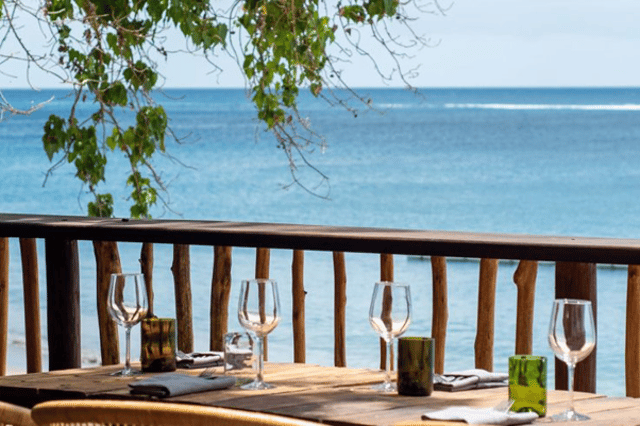
Then there’s Keeping It Real, a local secret on the shore of the Caribbean Sea that few visitors ever get the chance to eat at. For the people who live nearby, it’s just lunch.
The menu is short: Lobster or fish. Lobster has to be ordered ahead. The catch is timed to your reservation and comes in from the Caribbean Sea while you sip a rum punch that tastes like the real thing and hits like it, too. It’s the island’s short supply chain at its shortest: The water in front of you is where lunch was when you sat down.
Beyond that one table by the water, a Dominica food trip can skip restaurants almost entirely. A morning at the Roseau market picking up whatever’s in season. An afternoon at a roadside stand for provisions and fish, cooked simply because the ingredients don’t need much done to them. A stop at a farm further inland where the person selling you produce is also the person who grew it, standing in soil that’s still faintly warm in places from the volcanic activity underneath it.
None of that requires a tasting menu. It requires showing up when the market’s open and eating what’s actually good that day, rather than what a menu decided should represent the island.
The most honest thing about Dominica’s food culture might be that nobody there is trying particularly hard to sell it as anything other than lunch.