
Wildfires break out in London after days of sweltering heat
Two wildfires broke out in London yesterday (22nd June)
Two of the Brigade's wildfire response vehicles were deployed after two separate grass fires broke out in London yesterday (22 June).
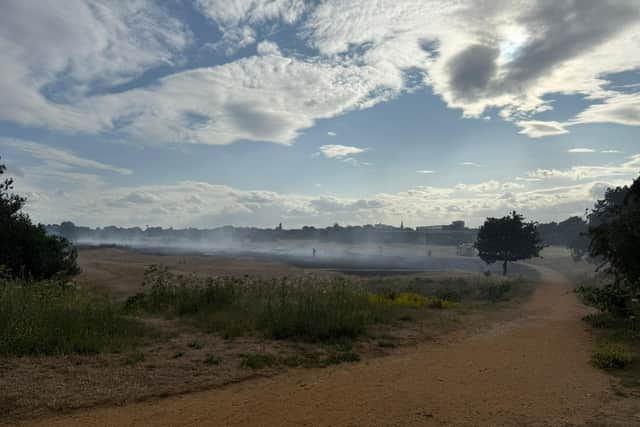

The first fire occurred shortly after midday when six fire engines and around 40 firefighters were called to reports of a grass fire in an open space on Mollison Avenue in Enfield.
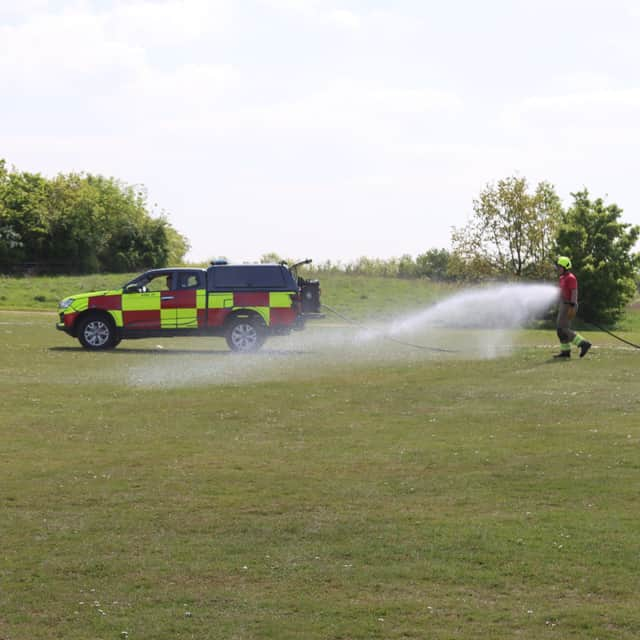
Firefighters deployed a wildfire response vehicle from Enfield Fire Station to help extinguish the fire. Due to the remote location of the fire, firefighters also implemented a water relay system.

Standard appliances were stationed between the incident site and the nearest water hydrant, and then connected together by hose. This allowed crews to pump a constant supply of water to the scene of the fire.
The wildfire response vehicle is one of four being trialled by the Brigade this summer to help respond to grass fires and wildfires. The vehicles are light, agile and its off-road capabilities mean it can reach places that our standard fire engines cannot. The vehicle is equipped with misting lance technology, which significantly enhances the way in which firefighters extinguish these fires.
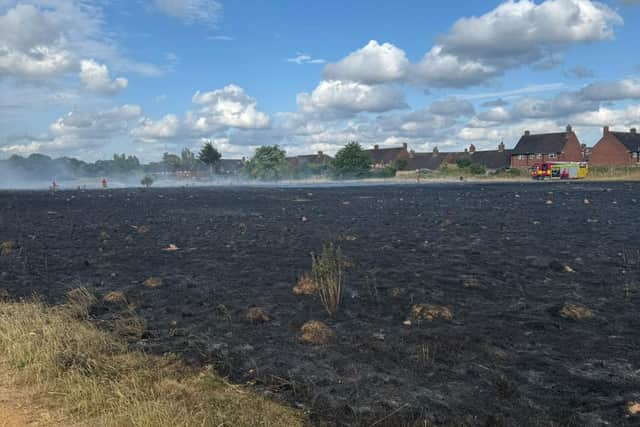
Later that day, at around 1650, four fire engines and around 25 firefighters attended a grass fire on Wigley Road in Feltham, where around four hectares of grassland was alight. Firefighters deployed a wildfire response vehicle from Feltham Fire Station and crews also used backpack blowers, which work just like leaf blowers. They allow firefighters to push flames back into already burnt areas.
This is a tactic that provides a faster, more efficient attack on wildfires. Wildfire beaters were also used. The beater is made of a long handle with a flat piece of rubber at the end. They’re used to beat the flames, which deprives them of oxygen and cools them down.
Feltham Station Commander Nathan Beeby, who was at the scene, said: "Around 25 firefighters worked professionally to contain this fire and prevent it from spreading into another field and towards properties, which is one of the unique challenges we face in London, where often open spaces lie close to homes and livelihoods.
"Firefighters developed a tactical plan to get ahead of the fire and create a break by wetting the ground to minimise its spread. The wildfire vehicle assisted in extinguishing the fire and helping to damp out hotspots around the perimeter of the field."
Reduce the risk of wildfires
With the Met Office warning of a hotter summer than usual, the Brigade is continuing its call to action to local authorities and landowners to create fire breaks to help protect communities from wildfires. This can include cutting and removing grass or ploughing earth to remove any flammable vegetation. The purpose of a fire break is to create a barrier that prevents the easy spread of fire by reducing or eliminating the fuel available, such as long dry grass, for the fire to consume.
The causes of both fires have been recorded as undetermined.