
London's oldest tube stations and when they were founded - including King's Cross St Pancras and Baker Street
Explore the history of London's oldest tube stations, including King's Cross, Baker Street, Paddington
The London Underground, commonly known as the Tube, is the world’s oldest underground railway system. It opened on January 10, 1863, with the launch of the Metropolitan Railway, running between Paddington and Farringdon.
The railway was created to alleviate London’s growing congestion by providing an alternative to overcrowded streets and horse-drawn carriages.
The early Underground lines were constructed using the “cut-and-cover” method, where streets were dug up to build shallow tunnels before being covered again.
Read more: Traffic & travel news
Initially, the trains were steam-powered, meaning stations needed ventilation shafts to release smoke and fumes. It wasn’t until 1890 that the first deep-level electric railway, the City & South London Railway (now part of the Northern Line), was introduced.
Over the next century, the Underground expanded dramatically, with new lines, deeper tunnels, and modernised trains. Today, the London Underground network spans 11 lines and over 270 stations, serving millions of passengers every day.
Despite its modernisation, many of the original stations from 1863 remain in use, preserving a vital part of London’s transport history.
The following is a list of the oldest Tube stations, all of which were part of the first underground railway.
1. Baker Street (1863)
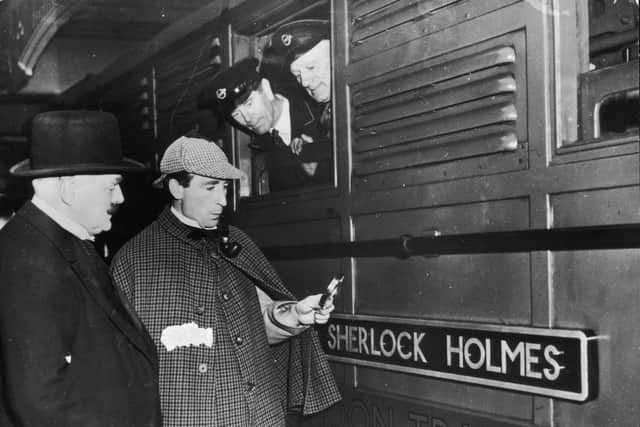

- One of the original stations of the Metropolitan Railway.
- Designed with five platforms and retains many of its Victorian features.
- Located near Madame Tussauds, Regent’s Park, and the Sherlock Holmes Museum.
- Has one of the most historically preserved platforms, with original tiles and signage.
- A major interchange, now serving the Bakerloo, Circle, Hammersmith & City, Jubilee, and Metropolitan lines.
2. Farringdon (1863)
- Opened as part of the original Paddington to Farringdon underground railway route.
- Initially designed to serve the Smithfield Meat Market, which was a key hub for London’s food trade.
- One of the first stations in the world to handle underground freight transport.
- Now an important interchange for the Thameslink rail service and the Elizabeth Line.
3. King’s Cross St Pancras (1863)
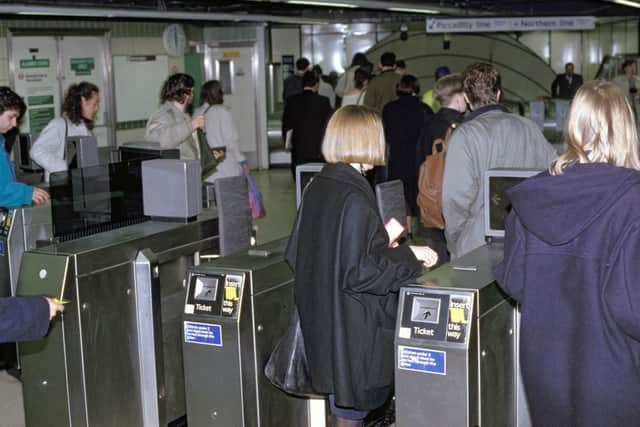
- Opened as part of the original Metropolitan Railway route.
- One of London’s busiest transport hubs, connecting with six Underground lines: Northern, Victoria, Piccadilly, Circle, Hammersmith & City, and Metropolitan.
- Serves two major railway stations – King’s Cross (for the East Coast Main Line) and St Pancras International (for Eurostar services to Europe).
- A major redevelopment project in recent years has modernized the station while preserving its history.
4. Euston Square (1863) (originally Gower Street)
- Originally named Gower Street and renamed Euston Square in 1909.
- Built to serve the Euston mainline railway station, one of London’s busiest train stations.
- Located near University College London (UCL) and The British Library.
- A key stop on the Circle, Hammersmith & City, and Metropolitan lines.
5. Great Portland Street (1863)
- Opened as part of the original Metropolitan Railway.
- Located close to Regent’s Park, BBC Broadcasting House, and Oxford Circus.
- Originally known as Portland Road, it was renamed Great Portland Street in 1917.
- One of the few early Tube stations to retain some original Victorian architectural features.
6. Edgware Road (Circle, District, Hammersmith & City lines) (1863)
- Opened as part of the original Metropolitan Railway.
- Not to be confused with Edgware Road station on the Bakerloo Line, which opened later in 1907.
- Located near Paddington Basin, a key development area for business and residential projects.
- Historically important as part of London’s early transport network expansion.
7. Paddington (Hammersmith & City Line platforms) (1863)
- One of the oldest Tube stations, serving the original Metropolitan Railway.
- Originally connected with the Great Western Railway (GWR) for onward travel to cities like Oxford and Bristol.
- Located near Paddington mainline station, the Heathrow Express, and the Paddington Basin.
- Today, it serves the Hammersmith & City, Circle, District, and Bakerloo lines.