
Royal Holloway graduate warns London workers are burning out in silence
Eco-adventurer Isaac Kenyon, who studied MSc Geoscience at Royal Holloway, University of London, discusses burnout, resilience and why high-pressure workplaces need to treat recovery as part of performance.
Burnout is no longer a private workplace problem. In high-pressure cities like London, where long hours and constant availability are often treated as signs of commitment, many high performers are quietly reaching breaking point.
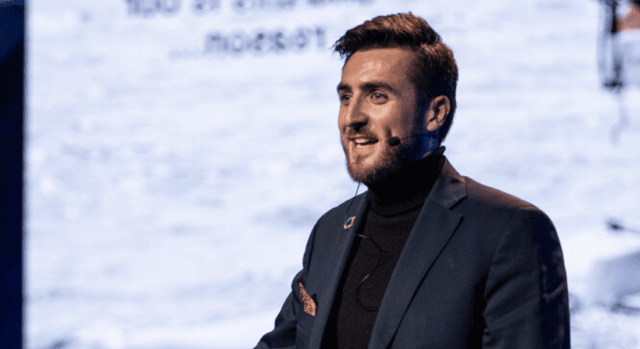

Isaac Kenyon brings both local and professional authority to that conversation. He studied MSc Geoscience at Royal Holloway, University of London, and has since built a career as a world-record eco-adventurer, endurance athlete and founder of Climate Explorers CIC.
He has rowed the Atlantic, completed a full-distance Ironman wearing a 15kg weighted vest, and used extreme physical challenges to raise awareness around mental health, resilience and sustainable leadership. His work sits at the intersection of human performance, workplace wellbeing and climate-conscious leadership, making him a compelling environment & sustainability expert for a conversation about how people, teams and organisations can perform without burning out.
In this exclusive interview with the Sustainability Speakers Agency, Isaac Kenyon discusses burnout, resilience, mental health and what leaders must change if they want people to perform well without breaking.
Question 1. In a city where being busy is often treated like proof of ambition, why are so many high performers reaching breaking point?
Isaac Kenyon: “High performers are burning out more than ever. Not because they lack skill, not because of motivation or even discipline. I really do think it's down to our systems and mindsets that are very much built for short-term output, not sustainable performance.
“Being busy has become this sort of badge of honour, like, I have this personality, I'm always busy, even when it is doing real damage. And from my experience rowing oceans, leading teams under pressure, you know, there is this whole badge of honour sometimes within those expeditions of being busy, and I'm working really hard. And I've seen the same patterns in the corporate life. But when people push too hard and they're ignoring the recovery, mistake busyness for impact, that's a big one.
“Over time, the body and the mind, it will reach a breaking point. And to that, you know, you've got these modern workplaces with these new pressures, constant disruption from artificial intelligence and unclear purpose, that lack of psychological safety. It leads even the most talented, driven individuals that you could possibly think of to start feeling exhausted, disconnected, and overwhelmed.
“So, yeah, high performers, they're not going to burn out very loudly. They often will burn out very quietly and then they will just disappear. And the solution isn't asking people, you know, to work harder.
“It's embedding that sustainable performance into culture, giving people that clarity of purpose, managing the energy, building the trust, creating that culture where recovery actually is seen as part of the success, you know, not weakness.
“Oh, we're having a recovery week. How great, you know, because we've done so well before, we push hard, we're now recovering, ready for the next cycle instead of push, push, push.
“So, the solution there is, I, yeah, when organisations do that, high performers, they're not only going to survive, but they’re also going to thrive. They're going to become calmer, more focused, way more productive, and they will do this even under pressure. And the best part, they will stay.”
Question 2. You wore a 15kg weighted vest during an Ironman to represent the weight many people carry silently. What did that experience reveal about stress, focus and recovery?
Isaac Kenyon: “Doing an Ironman in a 15 kg weighted vest, this was, for me, this was never about adding difficulty for the sake of it. I can confirm it didn't make the triathlon any easier. It was a symbolic live demonstration, the invisible weight that people carry every single day.
“And that vest represented the burden of mental health struggles, the weight of anxiety, depression, and the pressure that so many people hide beneath the surface. And that vest has got, you know, it got heavier as the days went on. And, you know, that's turned out to be the point because when you carry all that weight, it doesn't disappear. It will just keep being added to over time.
“I chose World Suicide Prevention Day intentionally as the event date because I wanted to challenge, to spark that open conversation, reduce the stigma around mental health and something I really know firsthand from living with anxiety myself and almost becoming a suicide statistic about a decade ago.
“So, yeah, it was a very important message I was trying to portray as a metaphor through that challenge. And from that experience, there were three lessons that are focus, stress and recovery that I think have resonance for leaders immediately.
“So, the first lesson I learned from that expedition was focus starts with purpose. So, every agonising kilometre reminded me about the clarity of why you do something that can carry you further than sheer effort alone. I can tell you, I wanted to rip that vest off a lot. But the reason for doing it was stronger than me quitting.
“In organisations, when the teams understand the purpose behind the work, you know, it will actually focus them. It will make sure the energy isn't wasted on noise.
“And then the second lesson that I learned from that challenge was that stress isn't a sign of weakness. It's a very good signal. Carrying that vest through a full swim, cycle, marathon run, it was physically brutal, but it became a metaphor for the psychological load that people drag into meetings, decisions, and leadership moments.
“And leaders can really help by normalising those conversations about stress, breaking the big challenges into manageable parts, acknowledging that resilience, like fitness, you can develop bit by bit.
“And my third lesson, which was, I believe, the most important lesson of it all, is that recovery is not optional. It really is strategic. No endurance athlete completes an ultra-endurance event without managing the rest through refuelling, recalibrating, you know.
“At work, recovery, whether that's through real breaks, you know, taking that full lunch break, detach away from work, reflective time or having that psychological safety with those open conversations with your manager, your peers. This is what turns those short bursts of energy and effort into a sustainable performance.
“And so, yeah, basically what I learned was very simple from that challenge. It was when you acknowledge, carry and intentionally manage the weights of all these different people in your organisation and what they face.
“You can unlock this sort of deeper focus, healthier stress responses in the workplace and a culture where, you know, recovery actually fuels the resilience so that you can continue under pressure and load rather than burning out under pressure and load.”
Question 3. Do London workplaces need to rethink what resilience actually means?
Isaac Kenyon: “Yeah, I definitely feel that the biggest misconception leaders have still to this day, and we're still working through it as a society, is that resilience is kind of a personal trait of toughness, ability to bounce back. That resilient people should just cope, push through, endure more.
“I mean, if that worked, the most resilient organisations would be obviously the most exhausted ones. And I believe that quietly undermines the performance because burnout is not a resilience failure. It's a design failure.
“And from these sorts of extreme endurance challenges and working inside large organisations, you know, the same patterns come up again and again. And it's when systems are built around constant urgency, cognitive overload, you know, sustained pressure. Even the strongest people, they’re just going to break, and no amount of grit can compensate for work that's poorly designed.
“So, yeah, very interesting. And when many leaders, you know, they often will call, you know, what they think high performance is, really when you look at what they think high performance is, I often see as short-term output driven by pressure.
“I mean, it really does look aesthetically impressive until decision-making declines, that creativity disappears, ethics erode and high performers, you know, they quietly just leave or burn out.
“So true resilience for me is about enduring, not, not true resilience for me is not enduring more pressure. It's about regenerating energy in nature. Nature is the original performance system. Nothing performs at a high level continuously in nature. Everything operates in cycles of effort and recovery. And that's how reliability, adaptability, and long-term performance, you know, that's how it's sustained in the long run.
“And when leaders see this, they will understand that they're misunderstanding resilience. You know, if they unintentionally are creating cultures where people are, you know, hiding their exhaustion, I mean, I see that all the time. And people stop speaking up and they're in survival mode.
“And, yeah, when leaders redesign work around a sustainable pace, trust and recovery is all part of, you know, working culture, the performance will become calmer. It will become more focused and way more durable.
“So, yeah, organisations that win in the long term, they aren't the ones pushing the hardest. They're always the ones that are designed to regenerate.”
This exclusive interview with Isaac Kenyon was conducted by Tabish Ali of the Motivational Speakers Agency.