
Refugee who built charity supporting 115,000 women shares leadership lessons
A London-based charity leader who arrived in Britain as a child refugee has spoken about how her experiences of conflict and displacement shaped her approach to leadership.
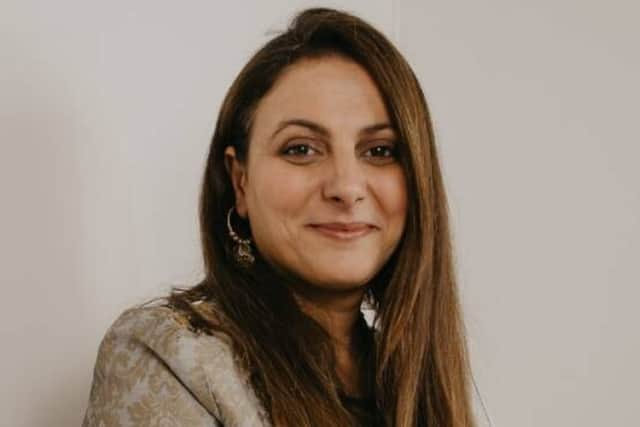

Taban Shoresh OBE is the founder and chief executive of The Lotus Flower, a charity supporting women and girls affected by conflict and displacement. Since founding the organisation in 2016, she has helped it grow from a one-person operation in her living room into a team of around 130, with its work having supported more than 115,000 women and girls.
Her achievements have earned her an OBE and the 2025 UNHCR Nansen Refugee Award for the Middle East and North Africa.
Speaking exclusively to the Inspirational Leadership Speakers Agency, Ms Shoresh said the lessons she learned during a difficult childhood continued to influence both her leadership style and the work of The Lotus Flower.
She said one of the most important lessons had been the power of kindness, describing it as an act that could create a "domino effect" and lead to wider change.
"I absolutely believe that one act of kindness can change the world," she said.
"It's a bit like laying down a domino, which sets off a chain reaction of dominoes.
"Through my lived experience, I have experienced kindness in so many forms, from the drivers that rescued us before we were about to be buried alive to the family that treated us like their own when we arrived in the UK as refugees in 1988."
Ms Shoresh said creating a strong organisational culture had also been central to the growth of The Lotus Flower.
"We started from absolutely nothing in my living room, just me. I've built a team of around 130," she said.
"We have a very strong culture, and that culture is making everyone believe the purpose, be part of the purpose and see the vision.
"You carry them with you to believe in the purpose and the vision. The moment you give them autonomy and trust to deliver on their purpose as part of the mission, that's when you see the most amazing results and changing culture."
Her approach to leadership has been shaped by adversity, but Ms Shoresh believes resilience is not something people have to experience hardship to develop.
"I've had many obstacles in my life, which have added and strengthened that resilience muscle," she said.
"I don't believe everyone has to go through adversity to experience resilience. You can learn it from other people."
The charity has continued operating through periods of major uncertainty, including the Covid pandemic, conflicts around the world and declining funding.
Ms Shoresh said communication and a clear sense of purpose had been crucial to keeping her team united.
"As a team, one of the key things that has made sure that we collaborate is overcommunicating," she said.
"Overcommunicating removes any form of uncertainty, and honesty is always the best policy I found in our organisations.
"Also, in situations like that, you have to anchor the purpose. Just remind everyone of the purpose and not the plan.
"Leaders have to absorb a lot of the fear and not amplify it. You hold your team together."
Ms Shoresh's own childhood experiences were particularly profound. She describes herself as a child genocide survivor and former political prisoner who escaped being buried alive before fleeing conflict and arriving in the UK as a six-year-old refugee.
She said those experiences had heightened her resilience, emotional intelligence, empathy and compassion.
"I think they're great lessons that I've carried through my leadership, which has amounted to the impact that I've created," she said.
"I think they're both connected, and the thread between all of that is that every small action compounds into something bigger."
She also believes emotional intelligence has become increasingly important as workplaces move away from a focus purely on execution and towards greater collaboration.
"The business risk is not just a personal one. You have to think about how you connect with your employees as humans," she said.
"Therefore, how do you include them, cater for their needs and be flexible?"
She said flexibility had been important in retaining staff at The Lotus Flower, adding: "Remaining human is the key."
Ms Shoresh also highlighted the barriers still facing women seeking to progress into senior positions.
She said women were increasingly getting through the door to executive roles but could still be "stopped halfway through the stairs" when trying to progress through management.
Flexible working, she said, was an important part of addressing the issue and allowing women to balance careers and family life.
"For businesses, I think understanding that women as talent are phenomenal for organisations to really move and drive performance," she said.
"What can you do to accommodate and make things easier for them to be at work? How do you include them at every decision-making table on different levels?"
This exclusive interview with Taban Shoresh was conducted by Tabish Ali of the Motivational Speakers Agency.