
Long-lost Suffragette medal to be displayed for the first time in London
A previously unseen and extremely scarce silver Suffragette Medal, awarded to the chief nurse to Emmeline Pankhurst, leader of the Suffragette movement, is about to go on public display for the first time at an entirely fitting location.
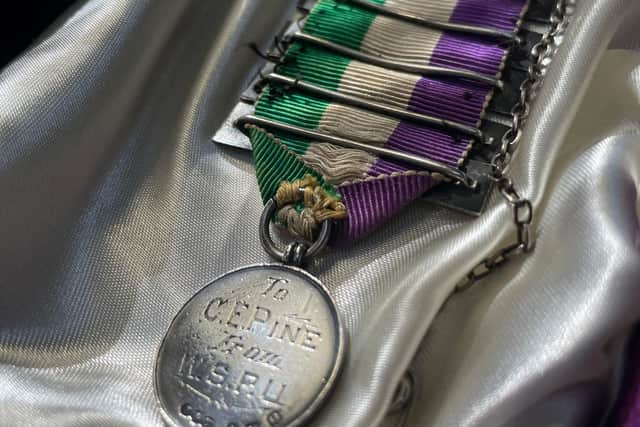
Missing for several decades, the circular medal, adorned with eleven silver bars and the purple, white and green ribbons of the suffragettes, will go on display for the first time in In Focus: Nurse Catherine Pine, a new display at the Florence Nightingale Museum in London. The display runs from 8 March 2026 (International Women’s Day) to 4 October 2026.
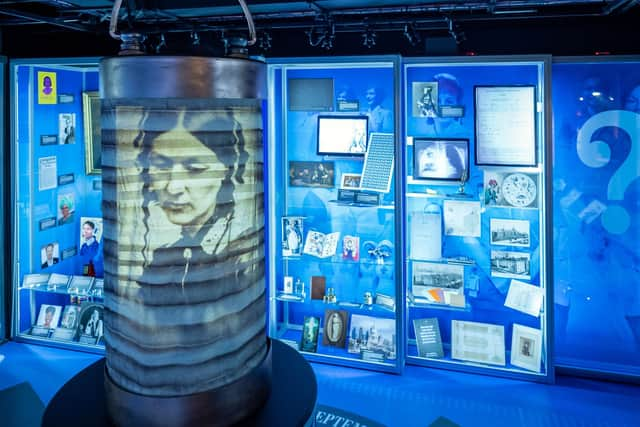

Dedicated to the pioneer of modern nursing, the Florence Nightingale Museum sits in the grounds of London’s St Thomas’ Hospital, at the southern end of Westminster Bridge. For full information, please visit www.florence-nightingale.co.uk
Nurse Catherine Pine’s medal was awarded ‘For Duty’ by the Women’s Social and Political Union (WSPU), founded in 1903 by Emmeline Pankhurst (1858-1928) and her family, including daughters Christabel and Sylvia, and soon known as ‘the suffragettes’. The ascending dates inscribed into the medal’s eleven silver bars attest to eleven major incidents, usually arrests, temporary releases and imprisonments under the Cat and Mouse Act, during which Nurse Pine (1864-1941) gave crucial care to the suffragettes. The first bar, ‘March 29th 1913’, marks Sylvia Pankhurst’s(1882-1960) release from prison after hunger striking and being force fed. All other bars reference Emmeline Pankhurst’s various arrests and release from prison. The final date, ‘July 18th 1914’, marks Pankhurst’s final arrest, shortly after which, she escaped to France rather than heading to prison in London.
Trained in nursing at St Bartholomew’s Hospital, where she rose to House Sister, Nurse Catherine Pine left the hospital in 1907 to set up a nursing home on Pembridge Gardens in Notting Hill, London, which became a refuge for suffragettes recovering after hunger strikes and imprisonment. After caring for Emmeline Pankhurst there, Nurse Pine became her formidable chief nurse. A true women’s rights worker and campaigner, she became especially respected for the care she gave to the suffragette leader during her hunger strikes, as the Votes for Women campaign grew increasingly militant. Nurse Pine also helped Christabel Pankhurst (1880-1958) and Sylvia Pankhurst (1882-1960) escape arrest by lending them nursing uniforms to form disguises.
When the First World War began, Nurse Pine continued to serve Emmeline Pankhurst, supporting her campaign for the welfare of the ‘war babies’ born outside of marriage when their fathers had been called up. Nurse Pine became the main caretaker of the four babies adopted by Emmeline Pankhurst and travelled with them to the US and Canada.
On Nurse Pine’s death in 1941, she bequeathed her medal to the British College of Nurses (BCN). However, as discovered by writer and historian Elizabeth Crawford OBE in 2016, the medal’s whereabouts became unknown. Crawford published a blog piece about the medal’s disappearance, which was read by Dr Hope Elizabeth May, a philosophy professor at Central Michigan University (and also an attorney), while researching suffragette medals in 2020/2021. May realised that she had seen a photograph of the medal in a 1990 newspaper article about a (then) forthcoming auction. May began researching the auction, and learned that, while originally unsold in 1990, the medal was sold at auction in London in 2008. She reached out to Crawford in 2021, sending her photos of the medal, and informing her about the developments in her research.
In 2024, the medal was again at auction in the U.S., and this time, May and Crawford worked together to try to repair the harm done to Nurse Pine’s wishes; Dr May duly acquired the medal herself. Since then, the medal has been used for educational purposes in the United States, and, with Crawford’s assistance, May has developed www.nursepinemedal.com, hosted by her non-profit, The Cora di Brazzà Foundation. Now, in accordance with Nurse Pine’s wishes, May is helping the medal to do its educational work in England, beginning with the display at the Florence Nightingale Museum.
Laura Sharpe, Director of the Florence Nightingale Museum, said, “We are so excited to be displaying Nurse Pine’s medal publicly for the first time. Pine is an overlooked figure in the Suffragette movement yet her skill and passion for nursing is proven from her medal to have been incredibly significant. We are extremely grateful to the wonderful detective work of Elizabeth Crawford and Dr May who have dedicated themselves to giving Pine the credit she deserves and ensuring her last wishes are honoured. It feels fitting to be hailing her in a museum devoted to significant a woman of courage and care.
Dr Hope Elizabeth May said, “I believe that Pine bequeathed her medal to the British College of Nurses with the intention that it form part of an educational project - one that situates her practice of the art of nursing within the broader histories of human rights and justice, and thus within the moral progress of our species. Both Pine and Nightingale are central figures not only in the history of nursing, but also in women’s history and in the philosophical and historical development of human rights and justice. I have no doubt that the moral energy intrinsic to Pine’s medal will be amplified during its time at the Museum. Visitors who enter this space, and who encounter the special display devoted to Nurse Pine, are likely to deepen their moral imagination and their appreciation for both Nightingale and Pine, just as Pine intended.”