
London AI expert warns businesses are underestimating the risks of AI
Ray Eitel-Porter says companies could face problems with staff development and decision-making as artificial intelligence takes on more workplace tasks
A London-based artificial intelligence expert has warned businesses they could be underestimating the long-term impact of AI on workers and decision-making.
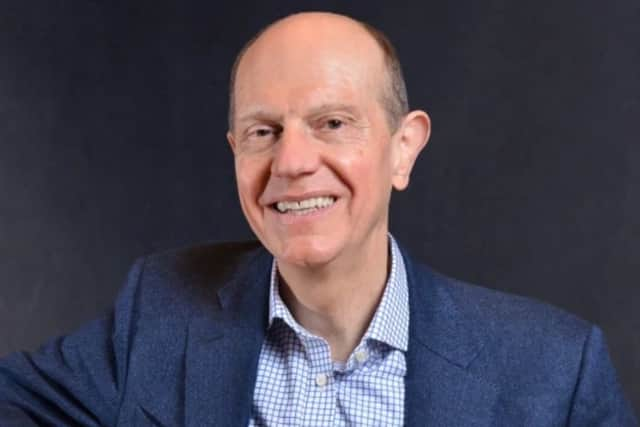

Ray Eitel-Porter, an AI governance expert, said concerns about inaccurate AI-generated information were well established but other risks could become more significant as the technology improves.
He said AI was more likely to take over individual tasks than entire jobs, meaning businesses would need to consider how employees were trained to work alongside the technology.
“Typically AI doesn’t actually replace entire roles. Typically, it replaces individual tasks or parts of roles,” he said.
“We need to spend a lot more time thinking about training people for how they do their job even better using AI rather than seeing it as a threat.”
He also warned that reducing the amount of work traditionally carried out by junior employees could create problems for career progression.
Junior staff often gain experience through tasks that help prepare them for more senior roles. If those tasks are increasingly handled by AI, businesses could have to find new ways for employees to develop the experience needed to progress.
“If you take away a lot of that junior work and give it to AI, how do people build the necessary experience to go into leadership positions?” he said.
Eitel-Porter said the issue was already being considered by law firms and professional services businesses, but could eventually affect other industries.
The risk of trusting AI too much
He also warned about “automation bias”, where people become too reliant on the recommendations produced by technology.
Eitel-Porter said the risk could increase if AI systems become more accurate.
If employees regularly spot errors, they are more likely to check AI-generated work carefully. But if mistakes become increasingly rare, people could become less likely to question the results.
He also highlighted what he described as “cognitive disengagement”, where people hand tasks to AI without developing their own ideas or arguments.
He used education as an example, saying there was a difference between asking students to critique an AI-generated draft and requiring them to develop an argument themselves from a blank page.
“If we don’t teach people how to deal with that blank sheet of paper, they’re going to be missing really important cognitive skills later in life,” he said.
Businesses urged to build AI safeguards into projects
Eitel-Porter said businesses needed effective AI governance without creating processes so complicated that they prevented innovation.
He said governance should be considered when AI systems were being designed, rather than introduced as a checklist once a system had already been built.
Businesses should also have clear points at which they assess the risks of buying or developing an AI system.
Higher-risk uses may require more detailed checks, while lower-risk applications should not face unnecessary compliance requirements, he said.
He also called for clear accountability, with someone responsible for overall AI governance and an identifiable owner for individual AI systems.
Staff training was another important part of managing the risks.
“Everyone should be aware of what AI can achieve, the positive things, how to use it in their day-to-day work, but also what risks to be looking out for and what to do about that,” he said.