
The amazing history of Leeds West Indian Carnival - from its humble beginnings to the artistic force of today

Discover the incredible history behind one of West Yorkshire’s most iconic and important events: the Leeds West Indian Carnival
- The August Bank Holiday Weekend is coming up, which means Leeds is preparing itself for a carnival atmosphere.
- No, not Leeds Festival - but instead, the wonderful, colourful and vibrant Leeds West Indian Carnival.
- Benjamin Jackson takes a look at the history and importance of the beloved West Yorkshire event.
Despite having lived in Leeds for, well, the best part of a decade now, I’m ashamed to admit that I have yet to attend the annual Leeds West Indian Carnival, which is rolling up for another Bank Holiday weekend of colour, flavour and community.
It is on the long, long list of things that I do need to accomplish in the city, and I assure you, it’s near the top of that list.
Hopefully, this year marks a chance to throw myself into what many residents, not just in Leeds but across Yorkshire, have described as an incredible weekend of entertainment, with the main event culminating on Bank Holiday Monday: the parade itself.
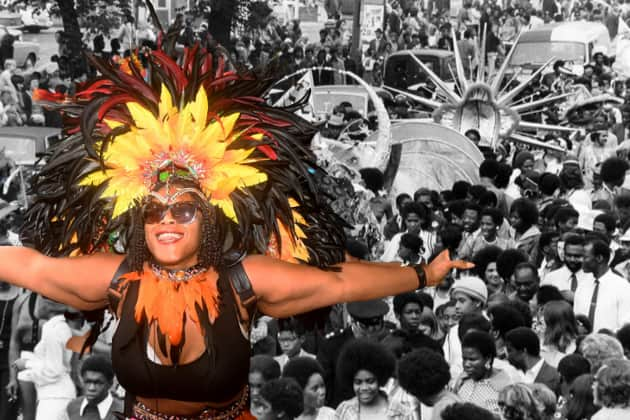

So given that I am but a boy from the muddy banks of Te Atatu in Auckland, New Zealand, I felt that I should read up a little more about the history of the carnival, from how it started back in the ‘60s through to the huge community affair it has become - or should that be, continues to be, from what I’ve learned reading about it.
Not too sure about the history yourself, despite being a regular in previous years? Good, I don’t feel quite as isolated now.
Here’s a look back at the carnival throughout the years, with a special thanks to not only the organisers of the event for their information provided, but to Max Farrar, who wrote an incredible paper regarding the milestones and historical checkpoints that the carnival faced, and continues to face, throughout the years.
So, before you don your most colourful outfits ahead of this weekend’s festivities, let’s learn a little more about why the carnival is considered incredibly important not just for Leeds, but for the British Caribbean population across the United Kingdom.
The history of the Leeds West Indian Carnival
The 1960s: The birth of a ‘European first’
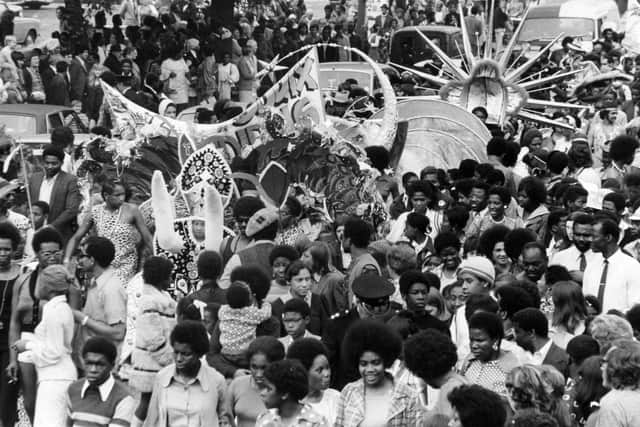
The roots of the carnival originated in 1966 when two students, Frankie Davis from Trinidad and Tony Lewis from Jamaica, organised a fete at Kitson College, which later became the Leeds College of Technology. Arthur France, a key figure from the carnival’s inception, initially proposed a carnival in 1966, but the United Caribbean Association at the time was not forthcoming with its support.
Instead, in 1967, France formed his committee, and with the help of individuals like Willie Robinson, Ian Charles, and others, preparations for the first carnival were underway.
The inaugural event in 1967 was historic, becoming the first carnival in Europe to be organised entirely by British Caribbeans and conducted on the same principles as those in the Caribbean.
A crowd of about 1,000 people watched a procession from Potternewton Park to Leeds Town Hall, where a steel band competition took place. The first Carnival Queen Show was held in Jubilee Hall, where Vicky Seal was crowned Queen in a costume titled ‘The Sun Goddess.’
The success of this first event led to the Leeds troupes being invited to participate in the first Notting Hill Carnival, which took place shortly after.
The 1970s: Expansion and growing public profile
The carnival continued to grow throughout the 1970s, with a set procession route established from Potternewton Park through the city centre. In 1970, the Carnival Queen Show moved to the Mecca Ballroom in the Merrion Centre, and the esteemed broadcaster Trevor MacDonald served as the Master of Ceremonies.
The event was gaining wider recognition, with a 1970 Yorkshire Life report describing it as "the first West Indian Gala to be held in this country."
By 1973, the carnival's organisation had developed significantly, and it began to attract contestants sponsored by local businesses and associations from across the region. A notable moment occurred in 1977 when the carnival was widely praised by police, who described it as "a wonderful day, and an example to other carnivals", following a period of widely reported clashes at the Notting Hill Carnival.
Ian Charles noted that the Leeds event's one-day structure, focused on a three-hour parade, kept people from getting "tired, or restless."
The 1980s: A shorter route and new sounds
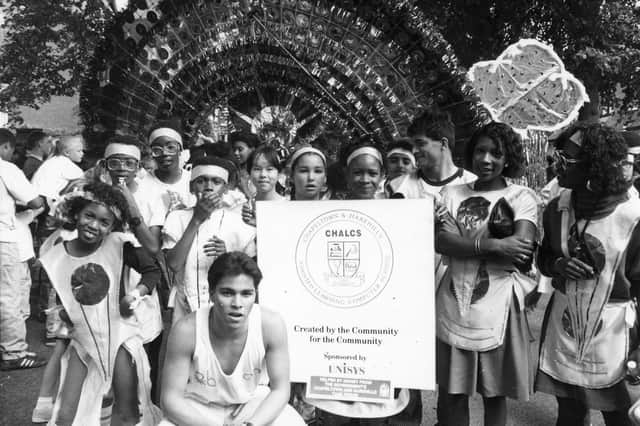
The 1980s marked a period of growth and adaptation. The parade route was shortened to avoid the city centre, a precedent that has largely been followed ever since. This decade also saw increased support from public sector bodies, including Leeds City Council, the Commission for Racial Equality, and Yorkshire Arts Association.
The carnival also began to embrace newer musical styles, with the inclusion of reggae-based music from local sound systems like Kooler Ruler and Mavrick Sounds, which helped attract a younger audience. The Carnival Queen Show and Last Lap Dance were transferred to the West Indian Centre in Laycock Place in the mid-1980s, providing a permanent home for the indoor events.
The band also celebrated its 21st birthday in 1988, with a commemorative magazine and high praise from police and local figures for its "happy and successful event with no incidents."
The 1990s: Tragedy and reinvention
The decade began with a devastating event in 1990, which the Carnival Committee later referred to as its "annus horribilis."
After the procession had finished, three people were killed in incidents involving rival sound systems. Despite this tragedy, however, the carnival returned to its normal format in 1991, with organisers successfully persuading sound systems not to set up on the streets.
In 1992, for its 25th anniversary, the carnival introduced the J'Ouvert morning parade, a new tradition modelled after the Trinidadian early-morning processions. The event also continued to grow in professionalism, attracting bigger names in Soca music and securing a longer list of corporate sponsors.
By 1997, on its 30th anniversary, the carnival was attracting an estimated 100,000 visitors. That same year, founder Arthur France was awarded an MBE for his extraordinary dedication to the community.
The 2000s: Milestone celebrations and continued growth
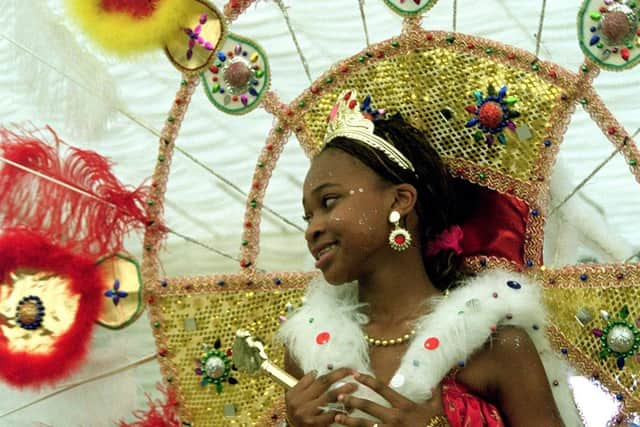
The Leeds West Indian Carnival entered the new millennium having firmly established itself as a cornerstone of the city's cultural calendar. In 2007, the carnival celebrated its 40th anniversary, drawing an estimated crowd of 100,000 people for the first time.
This milestone year also coincided with the 25th anniversary of the Leeds West Indian Centre and the bicentenary of the British abolition of the transatlantic slave trade.
In 2017, the carnival marked its 50th anniversary with a year-long program of spectacular events. A record-breaking crowd of 250,000 people attended the parade, making it one of the biggest events in the city's history.
A Heritage Lottery Fund grant of nearly £100,000 helped fund the "Leeds Carnival 50 Heritage" project, which included an exhibition, play, and workshops to preserve the carnival's history and traditions and the very first Carnival Queen, Vicky Cielto, returned to Leeds for the first time in 50 years to be part of the anniversary King and Queen Show.
The celebration highlighted how the carnival, while rooted in the Caribbean community, had become a beloved and inclusive event for people of all backgrounds.
2020-present: The impact of the pandemic and a new era
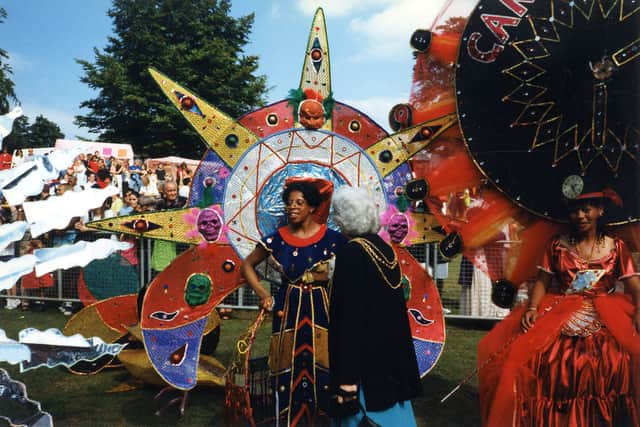
The 2020 Leeds West Indian Carnival was cancelled for the first time in its history due to the COVID-19 pandemic, with organisers "deeply saddened" by the decision, which was made with a "heavy heart" due to the immense strain the event would have placed on council staff and emergency services.
In a statement, founder Dr. Arthur France emphasised the carnival's ability to "unite the city through joy, happiness and adversity," vowing to return "bigger and better" in 2021. A virtual carnival was held instead on the August Bank Holiday Monday.
The carnival made its successful physical return in 2021 and has continued to be a major annual event. In 2024, the parade route was slightly updated to minimise disruption for residents and reduce the number of road closures.
The new route included Harehills Avenue, Spencer Place, Roundhay Road, Barrack Road, and Chapeltown Road. To give spectators more opportunities to see the vibrant displays, the carnival troupes completed two laps of the new route. The return of the carnival brought ‘an explosion of colour’ to the streets of Chapeltown, with dazzling costumes featuring feathers, sequins, and beads.
Organisers also began exploring a long-term funding strategy in response to financial pressures on Leeds City Council, including a public donation scheme launched to ensure the event's longevity, with a message to the community to "help us keep carnival alive”.
The scheme once more highlights the community's importance in ensuring the event's future amid financial pressures on the council. The Leeds City Council, in turn, expressed its pride in hosting the carnival, recognising its significant benefits to the city's culture, economy, and communities.
Do you have memories of the carnival you’d like to share? Contact the writer of this piece with your experiences during the early years of the event, or if you’re a recent attendee.