
London AI expert warns regulation needed where firms have ‘no economic incentive’ to prevent harm
Ray Eitel-Porter, a Senior Research Associate for Responsible AI, argues that regulation is needed to tackle risks including fake news and emotional dependence on AI where individual companies have little economic incentive to act.
AI expert Ray Eitel-Porter has warned that regulation is needed to tackle risks including fake news and emotional dependence on AI where individual companies have little economic incentive to act.
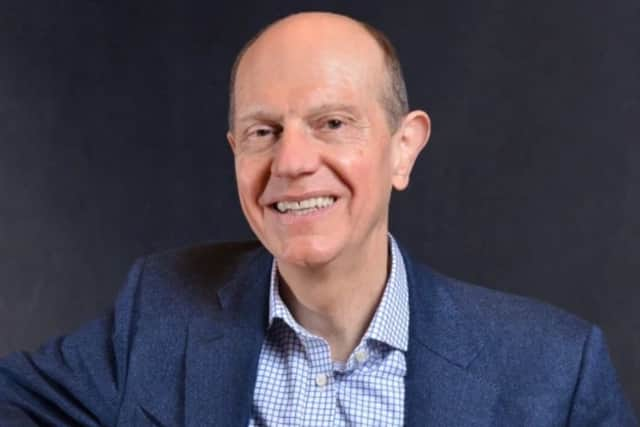

Ray Eitel-Porter is a Senior Research Associate for Responsible AI at the Intellectual Forum, Jesus College, Cambridge, and previously led Responsible AI globally at Accenture.
His comments come after transparency obligations under the EU AI Act began applying on 2 August 2026, covering areas including interactions with AI systems, deepfakes and certain AI-generated content.
Speaking exclusively to the AI Speakers Agency, Eitel-Porter said regulation could provide useful standards but warned against rules becoming overly complicated.
“Regulation has two important roles to play,” he said.
“It can be very helpful in terms of setting some standards and providing sort of best practice. But you don't want the regulation to be too complex and too burdensome.”
Eitel-Porter said the EU AI Act was one example where some believed regulation had become too complex, although he said it could still provide useful standards for organisations.
“The AI Act from the European Union is definitely one where a number of people would say it's perhaps a bit too complex and too burdensome, but it can have a useful function in terms of setting some very helpful standards,” he said.
He argued that regulation was particularly important when companies had little financial reason to tackle wider societal risks themselves.
“The key area where we need regulation is for risks where there's no economic incentive for individual companies to get it right,” he said.
“I'm thinking about things like fake news and its impact on democracy or people becoming addicted or emotionally dependent on AI and then the mental health challenges and harms that that can create.
“These are things where no individual company can solve those issues and there's really no economic incentive on companies to get that right.”
Eitel-Porter contrasted those risks with areas where mistakes can directly affect a company's own interests, such as inaccurate or biased lending decisions.
“That's not good business because that comes back to haunt an organisation,” he said.
“Organisations do actually try really hard to avoid those kinds of things. But these other areas need regulation to protect society.”
He said businesses should also avoid seeing AI governance simply as another compliance requirement.
For Eitel-Porter, effective governance can help companies make sure the technology delivers what they intended when they invested in it.
“Good AI governance is just about making sure that the AI does what you want it to do,” he said.
“No company sets out to develop AI that goes wrong and causes harm.”
He said checks and controls could give businesses greater confidence when deploying AI.
“AI governance is about making sure you've got the right tests and checks in place and controls to be really confident that the AI is going to deliver on the promise,” he said.
“That's where it becomes not a compliance burden but actually supports and helps innovation because it gives you the confidence to go and use AI because you know it will have been checked out thoroughly and has the best possible chance of delivering on its promise.”
Asked why people may struggle to trust AI, Eitel-Porter said a lack of knowledge was a major factor.
“I think that is mostly driven by a lack of knowledge,” he said.
“Humans tend to trust things that they understand. That's our first sort of mechanism for trust is, well, I know how that works. I understand it, so I'm comfortable with it.”
He said greater education was needed both within organisations and among the wider public.
“The more we can do to upskill people in basic understanding, I'm not talking about becoming data scientists or programmers, but just understanding how it works, the amazing benefits and what risks to be aware of.”
Eitel-Porter also believes independent testing could help people assess whether AI systems can be trusted.
“I do think we need third party assurance and testing and ideally I'd like to see some kind of kitemark system developed,” he said.
He compared the idea with standards used for physical products, while acknowledging that testing AI would be more difficult.
“It's not easy with AI. It's going to be much harder than testing a physical object,” he said.
“But I really think we need to work towards that kind of system where people in the public can look at something and say, ‘Oh, okay. Yeah, this was tested. We can be comfortable that that is working well.’”
Eitel-Porter said one of the biggest challenges was organisations treating compliance as a legal or technical requirement rather than considering how governance could support the business.
“Probably the biggest challenge is when an organisation thinks about compliance as a necessary kind of legal or technical requirement rather than actually something that is going to help them to drive the business forwards,” he said.
He said starting from a position focused primarily on avoiding risk could make it harder to use governance to build confidence in AI.
“If that mindset is wrong from the outset and it's more about just avoiding risk rather than thinking about the positive ways in which governance can help to enable the use of AI and to therefore build people's confidence and trust in the system, that is a wrong way to start thinking about the system.”
Eitel-Porter said AI governance did not necessarily need to become an extensive or complicated exercise for every organisation.
“This really doesn't have to be incredibly difficult,” he said.
“You should right size it to the complexity of the organisation, the scale of the organisation, the level of risks.”
He said he wanted businesses to understand the practical steps needed to begin introducing governance rather than viewing the subject as purely theoretical.
“I hope that people will go away with a clear understanding of the kind of road map and journey that they need to go on,” he said.
“But also practical steps for where do you start? How do we get started on this and what are the effective ways that we can actually make this happen.”
This exclusive interview with Ray Eitel-Porter was conducted by Tabish Ali of the Champions Speakers Agency.