
Tower of London under threat: UNESCO demands rethink of new tallest skyscraper One Undershaft

An international conservation body advising UNESCO has recommended the approved 76-storey One Undershaft building be called in by the Government to protect the Tower of London.
A Technical Review completed by the International Council on Monuments and Sites (ICOMOS) into the impacts of tall buildings on the Tower has also suggested 70 Gracechurch Street, approved by the City of London Corporation in February and sitting at 33 storeys, similarly be looked at.
The Ministry of Housing, Communities and Local Government was approached for comment but had not responded at the time of publication.
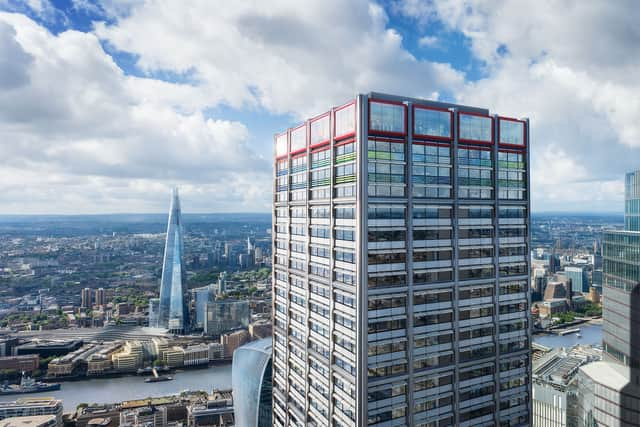

The Tower, which is located on the western edge of Tower Hamlets next to the City of London, is a designated World Heritage Site. One Undershaft, when completed, will become London’s joint tallest building alongside The Shard.
UNESCO, a United Nations agency promoting education, arts, sciences and culture across the world, last year requested a State of Conservation Report by the UK Government on the effects of skyscrapers on the Tower.
The report, compiled by the Government but contributed to by parties including Historic England and the City of London Corporation, was submitted with UNESCO in November.
An Executive Summary was subsequently published on the UNESCO website.
In that summary, the Government wrote: “The concept of clustering tall buildings in such a way as to avoid a harmful cumulative impact on the property’s [Outstanding Universal Value] is in line with the direct recommendation from the World Heritage Committee in 2007 and this policy approach has not changed. The City of London Corporation has proposed a new City Plan 2040 which would continue to consolidate the existing City Cluster of tall buildings in line with the World Heritage Committee’s recommendation.
“The ongoing local plan review has explored in detail how the approaches to tall buildings and the accompanying evidence base would manage the effects of such development within the Tower’s setting.”
The Government added the protections under the planning system and national policy remain the best way to protect the Tower, and that it did not consider a buffer zone to be necessary.
A UNESCO spokesperson told the Local Democracy Reporting Service (LDRS) at the time that ICOMOS was also conducting a Technical Review into the Tower, and that based on its findings, a new State of Conservation Report may be requested from the Government for consideration by its committee next year.
The City of London Corporation has since published ICOMOS’s report as part of the pack for its Planning and Transportation Committee meeting earlier this week. The review, dated June 2025, includes pages of background on the Tower and previous planning applications.
At the end of the paper are listed several recommendations, namely that the Corporation’s draft City Plan 2040, for which it recently finished public hearings, undergo a “drastic revision to consider other development alternatives that respect the setting of the Tower of London in relation to its support of the Outstanding Universal Value”; that it remains “essential and appropriate” for a buffer zone to protect views to and from the Tower; and that the Government call in the approvals of One Undershaft and 70 Gracechurch Street.
“ICOMOS reiterates its position that the approvals of One Undershaft and 70 Gracechurch Street, as well as the polices of the City Plan 2040, are in direct contradiction with the need to sustain the Outstanding Universal Value of the Tower of London World Heritage property, and, if implemented, would have the capacity to present a clear potential danger to the property,” the review stated.
“ICOMOS reiterates its conclusion that, although it understands the need for economic development, it considers that the current draft City Plan 2040 cannot be said to fully respect sustainable development.”
Historic Royal Palaces, a charity which manages six sites including the Tower of London, welcomed the review’s findings.
A spokesperson told the LDRS: “We have regularly and consistently highlighted the harm to the Tower of London World Heritage Site caused by the encroachment of tall buildings into views of and from the Tower. The cumulative impact of these developments over more than a decade is significant, and in our view, the City Plan 2040 establishes heights and contours at the eastern edge of the city cluster that would further erode the Tower’s setting.
“We will continue to work with everyone involved, and have suggested how plans could be amended to reduce the levels of impact on the Tower of London to an extent where the draft plan could be acceptable to all parties.”
Asked to comment on the ICOMOS report, a spokesperson for UNESCO referred to experts requesting a “fundamental revision” of the draft City Plan 2040 because of its impact on the Palace of Westminster.
They added however it is “possible” a new State of Conservation Report will be examined for the Tower of London during the next committee session due to it being located in the same city.
Historic England and the Corporation declined to comment on the ICOMOS report, as did Stanhope, the developer behind 70 Gracechurch Street.
A Corporation spokesperson previously said: “One of the reasons why the City Corporation seeks to cluster tall buildings together in specific areas, is to preserve key views and prized heritage features, like the Tower of London and St Paul’s Cathedral. This is how history and modernity combine to define what is unique about the Square Mile – a dynamic and ever-changing world city.”
The topic of tall buildings, including the possible impact on the Tower of London, was discussed at length at the recent public hearings on the draft City Plan 2040.
The Corporation is facing pressure from both heritage groups concerned about large building proposals and business groups, which are pushing for more office space to meet demand.
The draft City Plan 2040 includes a target of a minimum of 1.2 million of additional square metres of office space by the end of the next decade. The City Property Association, among others, is however calling for a target of 1.9m sqm.
It is not uncommon for UNESCO to request State of Conservation Reports, with three listed for the Tower of London on UNESCO’s website since 2011. Two have also been submitted by the UK Government, in 2014 and 2015, plus the recent Executive Summary.