
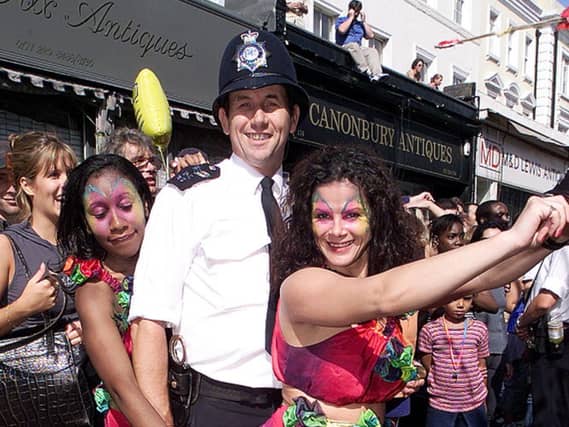


Notting Hill Carnival is an annual celebration of Caribbean culture and diversity in London.
The festival started in 1966 on the streets of the Notting Hill area of Kensington and has taken place every August bank holiday weekend ever since, other than forced cancellations during Covid.
By the time of the first Notting Hill Carnival, over 30,000 Caribbean people were living in the UK after the SS Empire Windrush’s arrival.
Trinidadian human rights activist Claudia Jones is credited with the first ideas for the carnival.
The first outdoor festival took place in 1966 and was organised by social worker and activist Rhaune Leslett.
The aim was to create an outdoor space to be enjoyed by children and the local West Indian community.
Today the event attracts over 2.5 million people annually making it one of the world’s biggest street parties.
We’ve taken a look at Notting Carnival over the years from its origins in 1966 to today’s colourful celebrations.
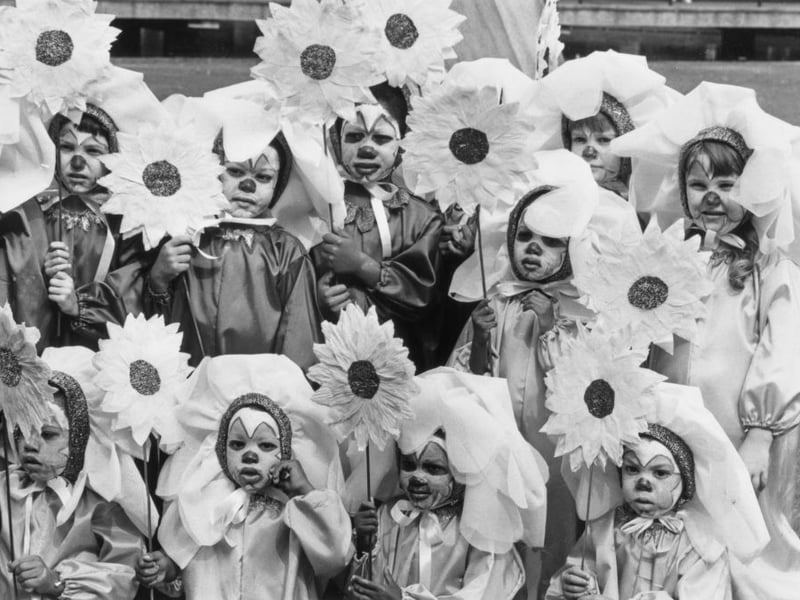
5. Young children wearing flower costumes and holding handmade flowers at the Notting Hill Carnival in Notting Hill, Kensington, London, England, August 1981. (Photo by Keystone/Hulton Archive/Getty Images)
In 1966 the first outdoor festival took place in the streets of Notting Hill. It started as an event for local children. | Getty Images
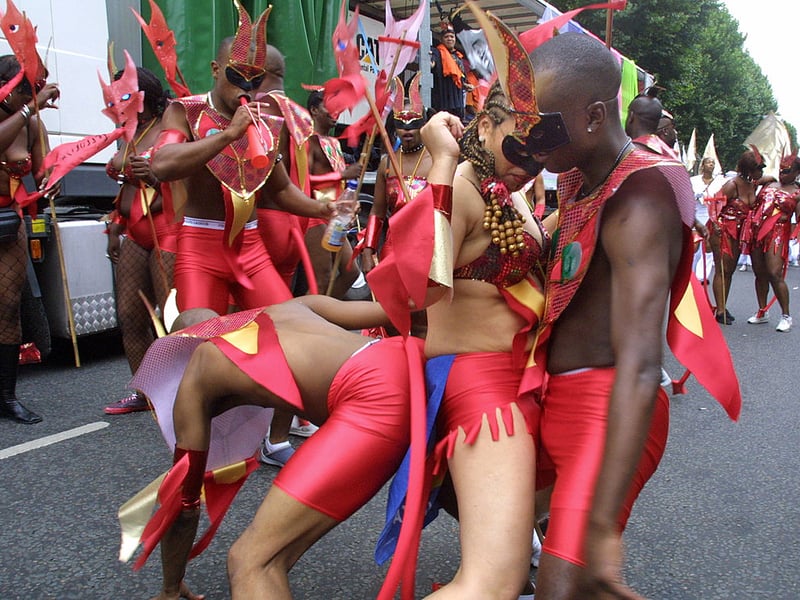
6. Revellers dance during the main parade of the Notting Hill carnival in London, 26 August 2002.
Notting Hill Carnival is an annual celebration of Caribbean culture and diversity in London. | AFP via Getty Images
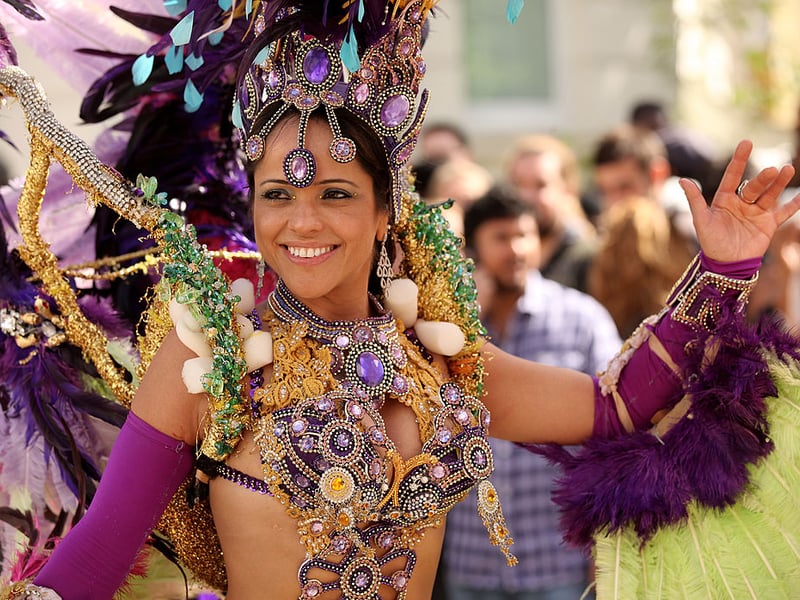
7. Performers take part in the Notting Hill Carnival on August 30, 2010
London’s Notting Hill Carnival is second only to Brazil’s Rio Carnival in size with over 50,000 people performing over the weekend. | Getty Images
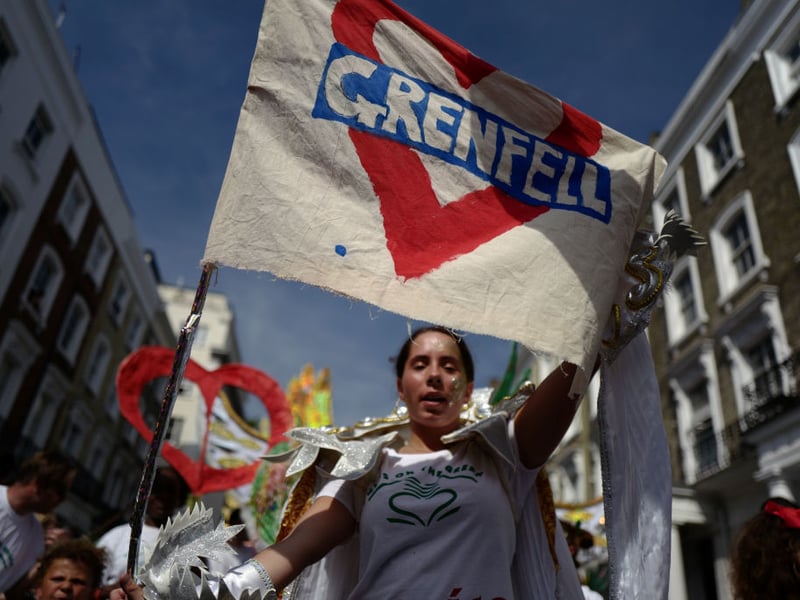
8. A carnival participant carries a Grenfell flag to commemorate the victims of the Grenfell Tower tragedy on August 28 2017
Grenfell Tower can be seen from the Notting Hill Carnival parade route | AFP via Getty Images