
6 interesting facts you never knew about the Great Fire of London
It has been 359 years since the Great Fire ravaged London - changing the shape of the city and its history.
Today, we’re taking a step back in time to revisit one of the most significant events in London’s history.
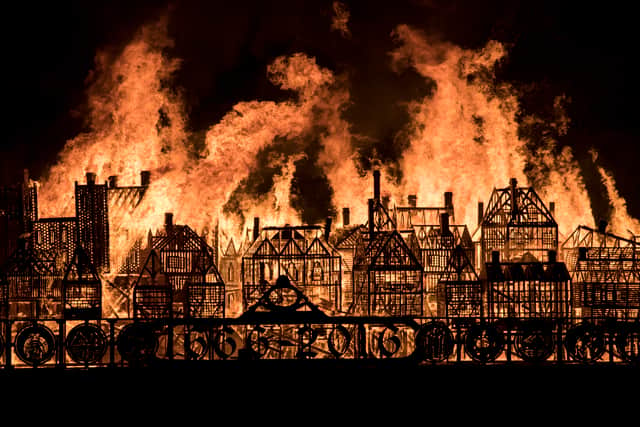

The Great Fire of London remains one of the capital’s most poignant historical moments, destroying a significant portion of the city.
The Great Fire of London started in a bakery on Pudding Lane on 2nd September 1666 and lasted until 6th September, ravaging the capital as it spread.
The fire burned for four days, devastating much of the medieval city, including over 13,000 houses, 87 churches, and numerous other buildings.
Despite the widespread destruction, the official death toll was surprisingly low, with only a few recorded fatalities.
As we near the anniversary of this monumental historic event, we have decided to share some interesting facts you might not know about the Great Fire of London.
What caused The Great Fire of London?

The exact cause of the Great Fire of London is not definitively known, but it is widely believed to have been an accident that started in the bakery of Thomas Farriner on Pudding Lane.
Several factors contributed to the rapid spread of the fire:
1. Highly flammable materials
London at the time was densely built with wooden houses, many of which had thatched roofs and were coated with pitch, a highly flammable substance. These materials provided ample fuel for the fire.
2. Narrow streets and overhanging buildings
The medieval layout of London featured narrow streets and buildings that often overhung the streets, allowing the fire to jump easily from one side to the other.
3. Strong winds
A strong easterly wind blew on the night the fire started, fanning the flames and spreading the fire rapidly across the city.
4. Delayed response
The initial response to the fire was slow. The Lord Mayor of London, Sir Thomas Bloodworth, was hesitant to authorise the demolition of buildings to create firebreaks, which could have slowed the fire's spread. By the time decisive action was taken, the fire had grown out of control.
Interesting facts about the Great Fire of London
1. The Mayor of London ignored the King’s orders
King Charles II ordered that firebreaks be made to prevent the fire from spreading. However, the Lord Mayor of London, Sir Thomas Bloodworth, hesitated, reportedly saying, "Pish! A woman could piss it out," underestimating the severity of the fire.

2. St. Paul's Cathedral was destroyed
The medieval St. Paul’s Cathedral, one of the most important churches in London, was engulfed by flames and completely destroyed. Sir Christopher Wren later rebuilt it in its iconic form.
3. The fire led to London’s redesign
The fire provided an opportunity to redesign London. Sir Christopher Wren proposed grand plans for a new city layout with wide streets and grand buildings, but the need to rebuild quickly and property rights issues meant that most streets were rebuilt along their original medieval lines.
4. The birth of the Fire Office
The Great Fire led to the creation of the first fire insurance company in England, "The Fire Office," established by Nicholas Barbon in 1681.

5. Monument to the Fire
A monument to the Great Fire, called "The Monument," stands near the site where the fire began on Pudding Lane. It was designed by Sir Christopher Wren and Robert Hooke and was completed in 1677. At 202 feet tall, it is still one of the tallest isolated stone columns in the world.
6. The end of the Great Plague
The Great Fire of London is often credited with contributing to the end of the Great Plague of 1665, as it is believed to have helped eliminate rats and fleas that carried the plague. However, this is more legend than fact, as the plague was already declining by the time of the fire.