
COP30 to address challenges and opportunities of carbon credits


World leaders at the 30th annual UN Climate Change Conference (COP 30) are preparing to discuss climate solutions in Belém, Brazil, near the Amazon Rainforest this November.
Blockchain carbon credits are expected to be centre stage at this forum, despite recent criticism from industry critics, opening up a conversation about the challenges and opportunities this tool for climate action brings.
What are carbon credits?
Carbon credits are standardised units that represent the reduction or removal of one ton of carbon dioxide from the atmosphere.
These credits are generated by projects such as reforestation and conservation projects that capture carbon from the atmosphere.
Companies can purchase these credits, which fund these kinds of initiatives, thereby mitigating their environmental impacts through a market-based mechanism.
They serve as a means to channel investments and develop sustainable programs.
Are carbon credits an innovative tool for climate action?
Blockchain carbon credits have emerged as an innovative and promising tool in the fight against climate change - despite a few criticisms.
On the one hand, these financial mechanisms offer an alternative to the lack of confidence in the traditional carbon credits system.
Known for being a transparent, secure and immutable technology, blockchain can be a powerful ally in achieving climate goals.
By bringing trust and transparency to the carbon market, blockchain-based credits can make it easier for companies to purchase credits, which could channel more funding directly to reforestation projects.
In addition to theoretical analysis, practical solutions are urgently needed, and technology becomes a significant ally in this matter, along with key players like sustainability communications agencies that can translate these complex discussions into actionable strategies, helping to highlight new paths to achieve this shared ambition.
Yet, although these credits are valuable tools for the ecological transition, the current way in which they are implemented and used raises several questions surrounding the genuine impact and results these mechanisms may have.
There is an ongoing debate questioning their true impact and arguing that, in practice, it could be used as a disguise tactic.
Instead of encouraging structural changes to actually reduce climate impact, these credits end up functioning as a symbolic currency to delay deeper transformations.
As they are in every COP, carbon credits will undoubtedly be a key topic at this forum.
But the fact that the event will be held for the first time in the Amazon rainforest, an area deeply impacted by climate change, gives it profound significance.

Challenges and opportunities
This system is sometimes subject to intense scrutiny.
Its credibility has been hampered at times due to difficulty in verifying the information and ensuring that there is no fraud present.
In this sense, blockchain-based carbon credits can help restore trust.
Critics argue that offsets don’t address the root causes of emissions and can distract from other critical issues like waste management and social equity.
The core characteristic of blockchain that makes it relevant in climate projects is its transparency. When a carbon credit is created as a token, it is possible to record its entire life cycle in an immutable public ledger, making the data available for anyone to verify.
All the information hashed on the blockchain cannot be altered or deleted, creating a permanent record of how and by whom it was manipulated.
This can solve any key issue in carbon credit markets, namely the fear of fraud, such as double-counting, which could lead to greenwashing.
Platforms like Orbify, Moss and Toucan Protocol operate similarly, offering credits in the form of tokens. Silvi is another example, utilising blockchain to record and organise tree planting initiatives and integrate the results into the carbon market.
Several initiatives are already underway using this technology to bring about practical change. The Biocultural Jaguar Credits, created by indigenous local leaders, is a good example, using blockchain to monitor and protect a vast amount of land within the Ecuadorian Amazon.
Some other Latin American enterprises of this nature include Inkaterra, in Peru, which utilises blockchain technology for orchid conservation. Ekonavi is another, based in Brazil but operating on all continents, it creates a conservation reward program using smart contracts.
Technological barriers and access are important considerations.
Especially in frontline communities in the global south, there is a lack of reliable internet access and also digital literacy problems, which can make it difficult for some people to interact with technology they are not familiar with.
Energy consumption is also a key aspect to be considered.
Blockchains can demand massive energy use, which can appear contradictory when you are trying to use them to solve sustainability problems.
There are already studies taking place, however, by means of new and more efficient protocols (proof-of-stake) that are being developed to make this technology more eco-friendly.
Brazil’s approach to blockchain applications in climate action
The BNDES (Brazilian National Bank for Development) has already drawn up regulations on carbon credits. It actively makes public calls to interested parties to purchase them, provides assistance with asset management, and ensures compliance with parameters to verify the impact is real.
The country’s national bank, Banco do Brasil, is in the carbon market and already supports blockchain technologies within it. This is also the case with several other companies, such as the Brazilian payment card service Elo, which has its own blockchain-based carbon credit platform. In 2023, Brazil also launched the first carbon exchange, B4, which also encompasses blockchain technology.
This supports projects and companies that want to operate in the country, empowering those already established by providing them with additional resources and tools to operate. One example is the Brazilian Biofílica. As part of Ambipar Group, it invests in reforestation and community-based programs in the Amazon Rainforest.
The role of COP30
Despite featuring crucial dialogues among credible voices, COP30’s main stage belongs to national governments, and it is here that the main debate must take place. This should be an important opportunity to reframe the conversation about carbon credits, not just as a tool for big corporations, but as a means for countries to make more foundational changes to tackle the climate crisis.
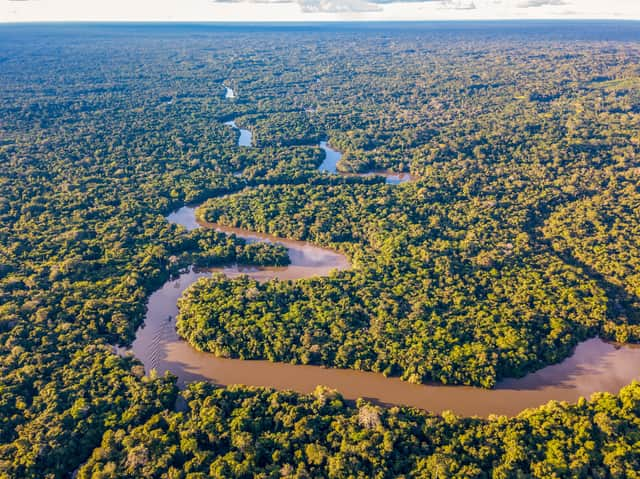
Brazil hosting the COP30 is deeply symbolic in many aspects, especially considering this event is taking place in Belém, located in the heart of the Amazon, a vital carbon sink and home to great biodiversity.
This will highlight the Global South perspective, often left far from the climate change front line.
Regarding this matter, discussions on carbon credits are essential —serving as a tool for justice, particularly for countries that offer natural solutions and engage with local communities to be part of the response. This brings to the table equitable, decentralised and transparent projects, in which blockchain carbon credits can provide the technological background to refine them