
Salomé returns: Gesher Theatre’s seductive masterpiece haunts the West End
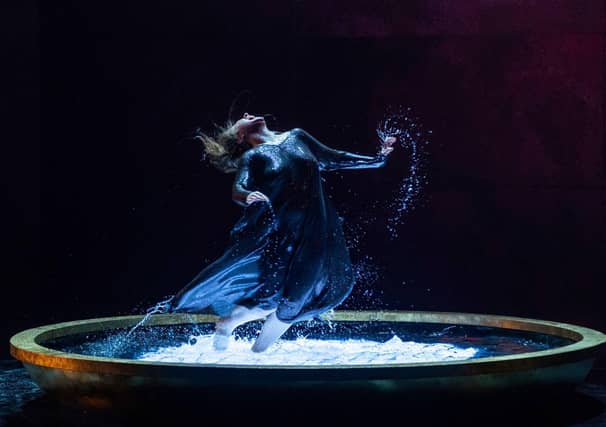

This autumn, Oscar Wilde’s Salomé returns to the West End in a hypnotic new staging by Gesher Theatre and acclaimed director Maxim Didenko. Playing at Theatre Royal Haymarket from 30 September to 11 October, this daring production revives Wilde’s dark tale of desire, power, and deadly obsession. With award-winning design and an original score, Salomé promises an unforgettable night of poetic decadence and theatrical boldness. Gesher Theatre returns to the UK after 25 years—don’t miss it.
Maxim Didenko brings a new vision to Wilde’s Salomé—how does his approach reinterpret this controversial classic for a modern audience?
Maxim Didenko tells the story of a king who lost control of his kingdom, of a prophet who sought to increase compassion in the world and cursed the corrupt, but his voice was unheard, and of a young woman who, when her love was unrequited, became venomous.
How does Galya Solodovnikova’s award-winning set design support or subvert the themes of eroticism and power in the production?

Although the original text has not been changed in any way, the setting presents a dystopian, timeless world that immediately draws the modern viewer into the plot. Herod's palace has a bar, guards with automatic weapons, and an erotic-dangerous atmosphere.
Wilde’s original play is drenched in poetic decadence—how has the production balanced fidelity to the text with theatrical innovation?
The text - original, the spirit - new, just as dark as the times in which we live.
Salomé is often seen as a seductress or a symbol of rebellion. How does this production frame her character: victim, villain, or visionary?
Salome is an enigmatic and very human character, because she combines paradoxes within herself - sensitivity and innocence versus impudence and eroticism, the desire for correction and redemption versus bloodthirsty revenge.
Louis Lebe’s original score adds a French compositional layer—how does music interact with the narrative and emotional rhythm of the play?
John's angelic voice (whose entire text is sung) is a tribute to liturgical music, while the music of Herod's world is passionate modern music.
Lighting plays a key role in creating atmosphere—how has Gleb Filshtinsky’s design shaped the visual language of this stylised world?
The lighting design uses the power of darkness, under whose auspices all those unspeakable deeds are committed in Herod's disturbed palace.
What unique challenges did the one-act format of Wilde’s script present for pacing, performance, and audience immersion?
The single act provides a journey that accelerates towards the bitter, orgasmic ending.
Dance is integral to Salomé’s story—how has choreography been approached in this production, especially in ‘the dance of the seven veils’?
The famous dance, which has been performed countless times, is given a performance in the current production that tells a complete story through movement - from innocence to animality, from love to revenge, and the nudity in the dance expresses the peak of Salome's power.
Salomé is presented by Gesher Theatre in collaboration with Theatre Royal Haymarket. Performances run from 30 September to 11 October 2025. Tickets available at trh.co.uk.