
Motorists face £1,000 fine for saying ‘thanks’
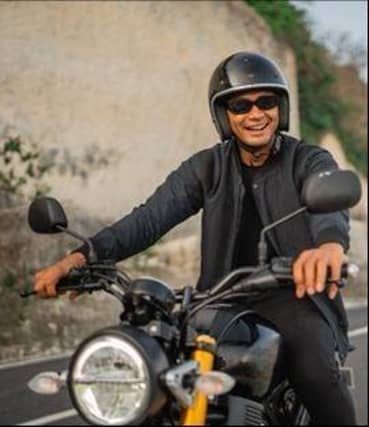

Expert reveals risk of wave or thumbs up while driving
Motorists that THANK other motorists risk a fine, discretionary disqualification and points on their license - whatever their vehicle - according to motoring expert from motorbike insurance brand Lexham Insurance.
A simple wave or thumbs up to say ‘thank you’ breaches rule 160 of the Highway Code which advises motorists to ‘drive or ride with both hands on the wheel or handlebars where possible… to remain in full control of the vehicle at all times’.
Removing a hand can compromise control, which goes against the Road Vehicles (Construction and Use) Regulations 1986, so could incur a £1,000 fine, discretionary disqualification and three penalty points.
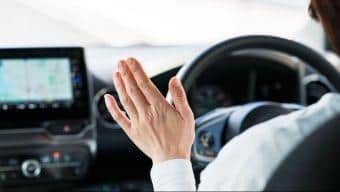
An exception to the rule is when indicators stop working. In this case, wave your hand left or right to show you want to turn or switch lanes.
Moreover, there are wider motorbike hand signals that riders use to communicate with each other but it’s worth being mindful of the risks.
Brett Tinkley, motoring expert at motorbike insurance brand Lexham Insurance, commented:
“We’re a polite nation, so motorists might instinctively wave a hand to express gratitude to others - especially if new to the roads.
“But doing so is a temporary distraction that ultimately reduces your control over the vehicle and could delay your reaction to other road activity. This is particularly important when travelling at speed, navigating complex road layouts or in heavy traffic.
“If you’re on a motorbike, moped or scooter, balance can be affected - more so in windy or wet conditions. A hand movement might also draw the attention of another motorist for a second too long. These factors could compromise the safety of you and those around you, despite very best intentions. Therefore, it’s wise to keep both hands on the steering wheel or handlebars where possible.
“Nodding your head and / or smiling in acknowledgement is often a visible sign to another driver or rider, especially where it’s harder to see electronic signals on a two-wheel vehicle. That way, your gratitude is as safe as it is courteous.”
OTHER COURTEOUS BEHAVIOURS THAT RISK PENALTIES
Hazard lights
Hazard lights are for stationary use to warn that you’re temporarily halting traffic.
Rule 116 of the UK Highway Code stipulates that motorists ‘must NOT use hazard warning lights while driving’ unless ‘on a motorway or unrestricted dual carriageway’ and even then only ‘to warn drivers behind you of a hazard or obstruction ahead’.
So, pressing that button on and off by way of thanks - for example, because another road user has let you merge - is ill-advised.
Flashing headlights
You might be inclined to thank an oncoming vehicle for letting you pass by flashing your headlights.
However, while kind, this opposes rule 110 of the UK Highway Code which states that you should “only flash your headlights to let other road users know that you are there” and “not convey any other message’.
In turn, while flashing to alert other motorists to police nearby might feel like a favour, it’s worse than a breach - it’s a criminal offence. Anyone who ‘resists or wilfully obstructs a constable in the execution of his duty’ (according to the Police Act 1996) risks a fine of up to £1,000 and / or a month’s imprisonment if caught.
Misusing your hazards and headlights goes against the Road Vehicles Lighting Regulations 1989. While there isn’t a dedicated fine, it could contribute to separate offences.
Motoring expert Brett Tinkley continues:
“Miscommunication might happen when lights are used incorrectly. For example, flashing headlights could be deemed an invitation to come forward.
“With hazard lights, the vehicle behind might slow down unnecessarily assuming you’re in trouble. This can be problematic in rainy weather particularly when a vehicle’s stopping distance increases.
“UK habits aren’t universal, either. If you plan on driving or biking abroad this summer, be mindful that flashing could contrastingly be considered rude or aggressive in other cultures. Motorists might do so to force others to speed up or move over. Should your well-meaning action be misinterpreted, there’s a risk of someone else retaliating in anger. It’s wise to research the road laws and customs of the country you’re visiting beforehand. If in doubt, avoid using hand or vehicle signals.
“Ultimately, finding or reminding yourself of the rules keeps roads, at home and away, safe.”