
From Greenwich to global leadership: How a Londoner's maritime journey shaped a world-class leadership voice
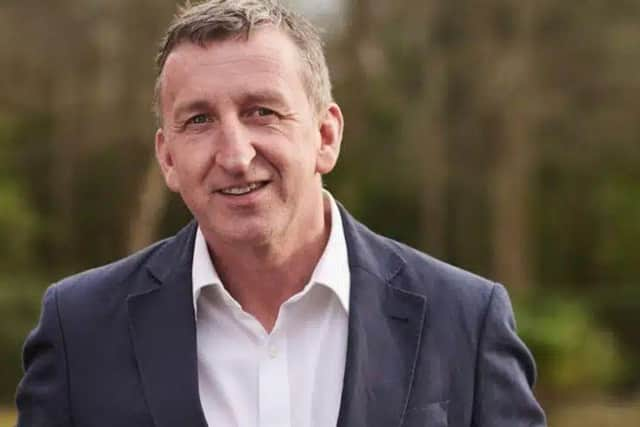
Born and raised in Greenwich—long celebrated as the home of maritime timekeeping and naval exploration—Mark Denton’s journey from London’s historic waterfront to skippering a round-the-world yacht race is a powerful story of leadership in motion.
Rooted in the capital’s rich seafaring legacy, his path resonates deeply with London professionals steering their own course through today’s fast-changing business environment.
Now recognised as one of the UK’s top change management speakers, Denton draws from over 80,000 miles at sea to deliver lessons that go far beyond the water. As a workplace culture speaker, he brings a fresh perspective on resilience, agility, and collaboration under pressure.
His flagship keynote, Navigate the Storm, blends immersive storytelling with powerful business parallels—making him a sought-after voice among high-performance speakers and leadership & teamwork speakers alike.

In this exclusive interview with Champions Speakers Agency, Denton shares what sailing taught him about leading diverse teams, staying competitive in turbulent times, and building cultures that are safe, happy, and fast.
Q: As someone from Greenwich—home to one of Britain’s great maritime traditions—you’ve sailed over 80,000 miles across some of the world’s most unforgiving oceans. What first sparked your interest in sailing, and how did it evolve into a global career?
Mark Denton: “Yeah, I mean, not the usual way or not the way that you might expect. It's not like I've been sailing since I was, you know, four years old and all of those kinds of things. I actually really only got into it at 21. So it just shows that you can be, you know, perhaps a bit later in your life and still get into something like this and achieve quite a lot.
“The way that I got into it—I’d actually just finished my business degree, and I sat at a kitchen table with my dad. He was sitting there reading the newspaper, as he always did, and there was a picture of an old tall ship—these old ships with these big sails that you have to climb the mast to set.
“It was an article on a race called the Tall Ships Race. The Tall Ships Race is for people between 16 and 24—at least the majority of the crew that does it are between 16 and 24. I said to him, “Wow, that looks amazing,” and he said, “Well look, you just finished your degree. If you apply for it and you go through all the selection criteria and you make it, I’ll back you,” because there was a cost associated with it.
“You know what—I did that. I sent off the form and had my interview and everything else, and I managed to get through and get on that race. Fundamentally, it changed my life because over the next 10 years or so is when I did my 80,000 miles, and I just loved it. I absolutely loved it, and I never really looked back. So it’s funny how your life takes you sometimes.”
Q: ‘Navigate the Storm’ draws from your experience leading amateur crews in extreme conditions—what inspired the keynote, and what lessons does it offer for London’s business leaders facing uncertainty today?
Mark Denton: “Navigate the Storm is the title of my keynote speech. ‘Navigate the Storm’ is really looking at a particular race, which was the culmination of my career. I was lucky enough, after 10 years, to have climbed the ladder enough to be skippering. But actually, I ended up skippering a team in a round-the-world yacht race.
“This was a very particular event. It was called the Global Challenge. The Global Challenge was unique in many ways—not least of all the fact that it was about ordinary people trying to achieve an extraordinary thing, in that anyone could take part in this round-the-world yacht race.
“My crew applied to do this thing from all over the world—all different ages, backgrounds and nationalities. So long as you’re between the ages of 18 and 60, you could sign up. So what we ended up with was a real slice of life taking this thing on.
“Basically, there were 12 teams like this—identical teams of these mixed, diverse amateurs—and in one way or another, we as skippers had to lead them around the world. Interestingly enough, the route was even very challenging—it actually goes the wrong way around the world, against the spin of the Earth.
“‘Navigate the Storm’ is really me sharing my experience about what it was like to lead a team like that and what I learned as a leader—and we learned as a team—as to how to navigate these constantly changing conditions in a very competitive environment. You know, not unlike the environment that businesses find themselves operating in today.
“‘Navigate the Storm’ is really about letting people get under the bonnet of this sporting endeavour, but many, many of the challenges that we faced were very much the same as businesses are facing in this kind of stormy world of today. So that’s what ‘Navigate the Storm’ is all about.”
Q: In today’s fast-paced capital, businesses must often balance performance with wellbeing. Why do you see ‘safe, happy and fast’ as essential principles for high-functioning teams?
Mark Denton: “Yeah, well ‘safe, happy and fast’ is the key learning that comes out of ‘Navigate the Storm’. Interestingly enough, it was actually the values that we chose on board our team that we felt were going to be really important for us.
“Actually, we kind of validated them across the race. If any team pays attention to these three things, that will provide the environment for high performance to flourish.
“Let me just talk about ‘safe, happy and fast’. Interestingly enough, ‘safe’ isn’t just about physical safety—obviously we were operating in a pretty risky environment—but this isn’t just about physical safety. Crucially, it’s about creating an environment of psychological safety.
“Psychological safety is really trust in teams. It’s that we’ve got an environment where people feel safe to be part of the team, safe to say what needs to be said, critique the strategy, suggest an idea. But also, if they’re struggling, safe to be able to put their hand up and say, “Look, I don’t know how to do this,” or, “Actually, I’m just struggling with this in one way or another—can I get some help?”
“That’s super crucial for teams. In fact, it’s the absolute foundation for a high performance team: create an environment of psychological safety.
“The second thing is about ‘happy’. You can have the greatest bunch of individuals, but if they’re not happy in what they’re doing or happy working together, then we’re never going to get high performance out of them. Whatever is standing in the way of them being happy—we need to pay attention to it.
“So whenever we weren’t happy, we thought about, well, what is it that’s stopping that happening, and how can we address that? That’s the second thing—got to get people happy again.
“And look at us post-pandemic, when people are in such a mixed mindset about where they want to work and how they want to work. We need to be paying attention to that and really thinking about how can we get people happy again and wanting to go after it, rather than having to go after it.
“Last but not least, we need to be ‘fast’. Slow boats never win—not on the racecourse, interestingly enough, and not in business. If you’ve got a competitor that just has a more efficient way of doing things, or makes it easier for their customer to interact with them and buy from them, then the customer is always going to take the path of least resistance.
“A lot has changed through the pandemic, and it’s really challenged our existing business models. We need to very quickly be thinking about how we adapt and change and be agile in relation to that. That’s what being fast is all about. It’s really about who can learn quickest.
“Certainly for us on the racecourse, us versus all the other teams—this was a learning challenge. Who can deal with the challenges that we face quickest? Because ultimately, that’s who’s going to be ahead on the racecourse.
“That’s what ‘safe, happy and fast’ are all about. We really kind of proved the importance of those things through this case study.”
Q: Whether on the Thames or the open ocean, collaboration is key. From your experience, what can London-based leaders learn about the link between teamwork and high-stakes leadership?
Mark Denton: “Well, I think it’s so important in any environment where people are coming together and going out there to achieve something special. Adventuring is always that—you’re always trying to climb a mountain, or trying to sail around the world, or whatever else it might be.
“I guess it just heightens the importance of that because you are operating in an environment that, actually, if you aren’t at your best, you’re really going to pay the price—especially when you’re competing against others.
“I think leadership and teamwork is always important whenever people are coming together to try and achieve something. It’s just super crucial.
“You know, it’s a bit like a cast. The boat isn’t going to go anywhere without people working together, and it’s not going to go anywhere fast without them working together well. All roads lead to leadership in order for that to happen, because we create the environment that makes that happen.
“It’s a crucial thing, and it always will be—no matter what the environment.”
This exclusive interview with Mark Denton was conducted by Roxanna Hayes.