
Doctor warns of STD boom following Christmas party season in the capital
Londoners having Christmas party flings and unprotected sex is set to trigger a spike in sexually transmitted diseases this new year, warns Dr Bani, Medical Director at Your Sexual Health.
According to a recent survey, this spike in STDs is being driven by a lack of communication, awareness and commitment to practising safe sex. The survey of 2,000 UK workers also found that there is still a stigma around sexually transmitted diseases.
What behaviour is driving the STD boom?
An estimated 26.2 million British working adults are expected to have unprotected sex during the Christmas party season (65%), with around 12.9 million (32%) doing so outside of a relationship.
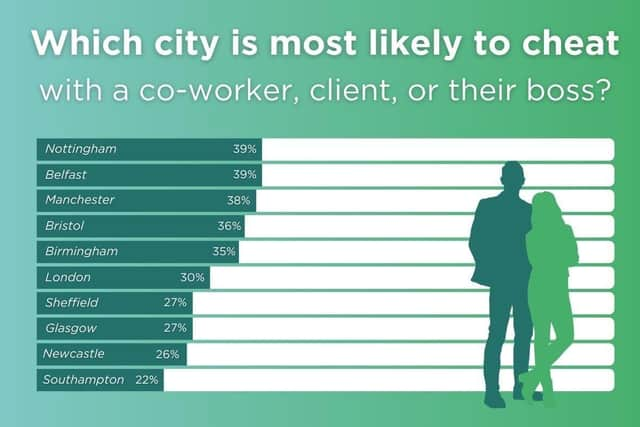

Shockingly 8.9 million (22%) said they wouldn’t use protection when having sex with a colleague either. That’s 5.2 million (13%) who admit they have done this and 3.6 million (9%) who would if the chance presented itself during the festive season this year.
With so many Brits failing to practise safe sex, it’s no wonder then that a quarter have had to get an STI test during Christmas time.
Dr Bani, Medical Director at Your Sexual Health said, “Failing to practise safe sex leaves individuals and their sexual partners vulnerable to a range of STDs, with the most common being, Chlamydia and Gonorrhoea.
"These can cause symptoms ranging from pain when peeing and green or yellow discharge, to bleeding and swelling. However, the threat of such symptoms doesn’t seem to be impacting everyone’s behaviours this party season, suggesting that greater awareness and education is needed.”

Lack of communication between sexual partners and stigma
It’s not only unprotected sex, that is driving the spread of STDs this Winter. The study found that there is a lack of communication between sexual partners regarding their health status too. Perhaps suggesting a lack of education on safe sex or a disregard for each others’ health.
Dr Bani commented: “With a New Year’s STD boom expected, we need more openness from those who have them. It is concerning to hear that 45% of people wouldn’t tell anyone if they had caught an STI, suggesting there is still a stigma around this common health condition.
“In addition, over a quarter (27%) said they wouldn’t tell any previous sexual partners at all and one in seven wouldn’t tell a partner if the relationship ended badly. This could leave many unaware that they have potentially caught an STD and require treatment.
"There are a multitude of health issues caused by STDs which, left untreated, may become serious, and in some cases, fatal. That’s why sure to regular testing to catch infections early is crucial to reduce your risk of developing severe health problems.”
In London, the biggest barriers to getting tested included:
- Lack of understanding of the process and tests available - 23%
- Lack of knowledge on where to go for testing - 23%
- Scared of the results - 23%
- Wait times and difficulty getting appointments - 17%
- Discretion concerns - worried about partner/friends/family members finding out - 14%
Lack of and poorly time testing
Over one in six Londoners will be taking protection to this year’s work Christmas party (16%), which is good to see as millions of workers across the UK are expected to sleep with a colleague at their staff Christmas party. What is worrying, however, is that almost a quarter of working Brits would not get an STD test after sleeping with a co-worker without protection - that’s a huge proportion of people who would be willing to leave themselves vulnerable.
What’s more, even Brits who are testing could still be at risk. Over half (55%) of British workers are testing for STDs too early, and are at risk of false-negative results - that’s a potential 22.1 million working adults!
55% of Brits risk a false negative for chlamydia or gonorrhoea because they test too early and 69% run the risk of getting a false negative for having contracted HIV, syphilis or hepatitis.
A guide to how long each takes to show up on a test and the testing method:
- Chlamydia/Gonorrhoea - 14 days - urine swab
- Genital Herpes - 14 days - blood, urine or swab
- HIV - 28 days - blood
- Hepatitis B and C - 28 days - blood
- Syphilis - 28 to 84 days - blood
The above is only a guide, ideal testing time can vary between individuals based on history and symptoms.
Visit Your Sexual Health’s website to find out more about the seasonal sex survey or the location of your nearest clinic for testing https://yoursexualhealth.co.uk/festive-fun-survey/