
Cat experts shares fascinating spooky history of our relationship with felines
It's a spooky season, and a time for hunkering down with our favourite scary movies, maybe with a little black cat on our lap?
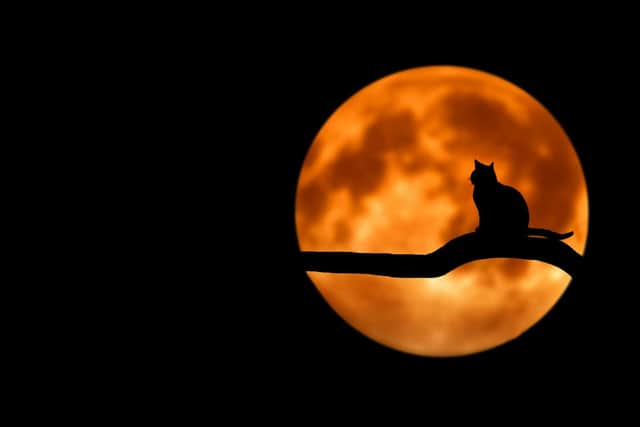
Black cats, and cats in general have long been part of myth and folklore, as witches' familiars, bringers of doom or even as a sign of good luck.
Here, Katie Gwilt, holistic feline expert, shares her favourite historical anecdotes about cats, and tells us why we should all have lots of respect for the furry Egyptian god living in our home.
She said: "Cats have long been thought of as mysterious, otherworldly, enigmatic creatures. They can move silently and do that weird thing where they stare at a seemingly empty corner of the room for longer than is comfortable for us.

"People tend to have quite strong opinions about if they are a cat person or not and throughout history this seems to have been the case too. How does this love/hate relationship affect how we treat cats and how we regard them?"
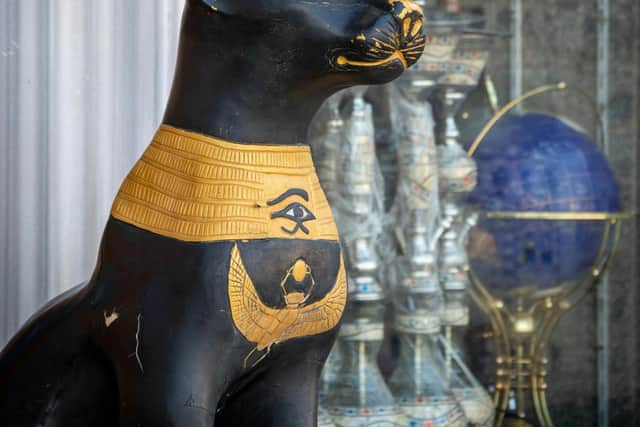
Egyptian renown: Cats were highly protected in Ancient Egypt as a species and this was where the domestic cat really gained its popularity living alongside humans. It’s unlikely they were the first to tame wild cats, but the Ancient Egyptians definitely raised their profile significantly.
It was reported by the historian Herodotus when he visited Egypt around 450 BC in his writings about how the human families of cats who had died of natural causes would shave off their eyebrows. Diodorus Siculus (another historian around 60-57 BC) also reported what would happen if the cat had died of non natural causes: “Whoever kills a cat in Egypt is condemned to death, whether he committed the crime deliberately or not”.
This may seem a little extreme now, but the Persian army used this to their advantage in 525 BC when a forward thinking commander ordered all the cats in the area to be rounded up the night before their attack was due. The cats were then released just before their final attack and the Egyptian defenders surrendered rather than risking hurting any of the cats by accident. Sneaky but effective.
It’s not so much that cats themselves were worshipped. Often one animal was chosen to be the representative of the particular god/goddess and the cult of cats didn’t become really popular until later on around 935 BC.
Earlier there isn’t much evidence cats were often kept as pets and if they were they were usually called “cat”, except for one cat found to be called njm which means “sweet”.
Cats were associated with Bastet, a cat-headed goddess linked to fertility, the fields and the womb. Later it became popular to mummify cats as an offering and cat cemeteries have been found, some with 100,000+ mummified cats. Sadly it has been discovered that many of these mummies were of cats younger than two (many around four months old) that had been deliberately reared and killed for these purposes so not quite the honour it would seem.
It’s also been found by X-Ray that often other bits and pieces were put in with parts of the catto pad the mummy out. A gruesome way taxidermists used to deal with leftover parts from other animals and humans…
One thing I found interesting was that when a large cat cemetery was discovered in Beni Hasan near the Nile in Egypt, the majority of the cat mummies ended up being transported to Liverpool by boat.
They were then auctioned off for 13s. 9d a ton. The auctioneer even used a cat skull as a hammer (I think he was trying to be funny…). There were 19 tonnes in all and they ended up being ground down and being used as fertiliser. In 1935 a series of arrow-heads were found in a field up in Scotland which turned out to be from the cat mummy-based fertiliser. A couple survived and can be found in the Natural History Museum in London.
Medieval scourge: The perception of cats took a bit of a downward turn in Medieval times in particular. They had been lauded for their rodent catching skills. They were often put in wills and legacies in France in the 11th century and they were also sold for a good price in Wales during the 10th century.
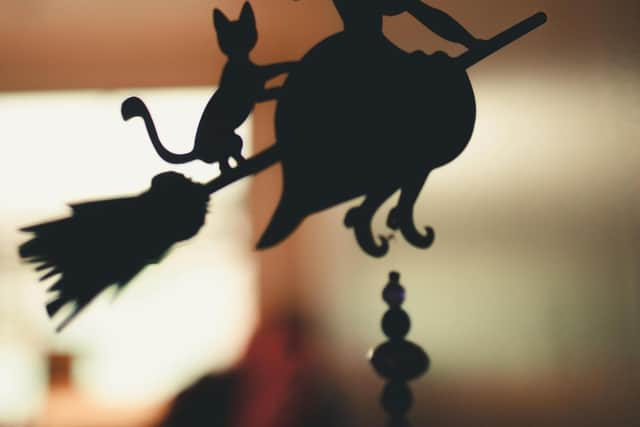
The late Middle Ages however saw cats being publicly tortured and killed. They also managed to get mixed up in the witch trials and associated as witches familiars. There are theories that cats were associated with pagan deities and women and the church wanted to stop this type of worship.
Cats are notorious for being promiscuous and vocal when they are in heat and there has been debate that they were persecuted at this time due in large part to misogyny and the patriarchy. James Serpell wrote “the unmitigated cruelty cats have received as a result of this metaphor speaks volumes about the sexual insecurities of European males.” This quote always makes me chuckle, I have to admit.
It’s possibly reaching though to make such a strong specific connection with cats and witchcraft/persecution at this time. People in Medieval Times were particularly vicious and tortured many animals, including humans, and this was by no means limited to cats.
Other animals were also often depicted as witches' familiars, so again this wasn’t limited to just cats by any means. Dogs, owls, toads, pigs, goats and rats are some of the other common familiars that were reported during these times. There's also a suggestion that many tales were fabricated by smugglers and counterfeiters to keep people at home in the evening away from their nefarious dealings.
Feline superstitions: There are some common superstitions that have been found in many different countries with only minor alterations. One associates witches and cats with a tale of a man who one night is attacked by a cat and retaliates by breaking or severing one of its limbs. The next day there is a woman (usually an old woman) in the village who suddenly has the same break or missing limb.
Other superstitions are often contradictory. Some say if a cat jumps onto a bed that person will die. Others say that if a cat jumps off a bed that person will die. To see a black cat at night is bad luck in some places, in others it’s a white cat. Cats can suck the breath from sleeping children, but if you entomb one in the walls of a building being built it will bring protection.
If you maim a cat it can protect you from sorcery, but also killing a cat brings bad luck. It’s all very confusing. My personal favourite due to its ridiculousness is a left-handed man needs to find a black cat and swing it around his head three times. Then extract nine drops of blood from the tail and add to the remains of nine roasted barleycorns. If this is applied to a gold wedding ring which he wears while walking around the patient three times calling to the Holy Trinity, the itch of any kind that the patient is suffering with will be gone! If its shingles though, just wiping some of the blood from the cat's tail taken after the swinging by a left handed man is plenty though so that’s good news!
We still have our superstitions about cats even in the modern world. Some still believe that cows milk is good for kittens (it really isn’t, they need special kitten milk if they can’t feed from their mother). Saying domestic cats are solitary animals and just tolerate humans is a bit off the mark too. Feral and stray cats often form colonies and females share taking care of the young plus many people successfully have multicast households. Not all cats hate water, the Turkish Van cat actually loves it and often goes swimming. There is also still the idea that cats and dogs cannot mix. This is true sometimes of course, but if introduced correctly and patiently this isn’t always the case.
One mundane reason that perhaps explains why there are so many superstitions about cats is that their senses are just so much more sensitive than ours. They can hear the high pitched noises of rodents that we cannot and see movement much further away than us. They have two organs for their sense of smell, their nose and the vomeronasal organ between their mouth and nose. When they use this organ they pull that weird face where their top lip is pulled back and their mouth opens a little called a flehmen response. They use their whiskers to feel air currents as well as judge the width of gaps. All of this means they can see, hear and smell things that we humans can’t. They are even able to sense earthquakes before humans can.
All this means is that your cat probably isn’t staring intently at a bunch of spooky entities in that dark corner of your bedroom that it can see and you can’t… It’s probably just a bit of lint or dust that’s moving we cannot see. Probably… It also means that in Medieval times people were probably a lot more entertainment starved than we are today (I mean have you seen Medieval artwork of cats?) and hopefully even during a pandemic we won’t resort to superstition and conspiracy theories. Wait a minute…!!!