
AI technology trials at London stations to enhance passenger safety on the tracks
Whether we like it or not, artificial intelligence has already crept into our everyday lives. An AI trial is being rolled out at some of the London stations to detect people on tracks to increase the safety of humans.
Prior tests of AI-based technology to improve passenger safety were conducted at Willesden Green Underground station and on the Docklands Light Railway (DLR) network. The system will disregard the normal motion of trains and utilize artificial intelligence (AI) to identify things on the rails, such as people who have fallen or jumped on lines.
To help avert a disaster, station personnel will then be informed of the situation. The DLR at Custom House station is now undergoing testing of the technology. The CCTV AI experiment, an AI solution, has previously been tested by DLR's operator Keolis Amey Docklands.
According to Keolis Amey, “it detects and identifies objects on the tracks without mistaking them for train movements" using artificial intelligence and surveillance cameras. Following the testing of comparable devices at Willesden Green Underground station, the experimental technology is currently being tested on the DLR platforms at Custom House station in east London.
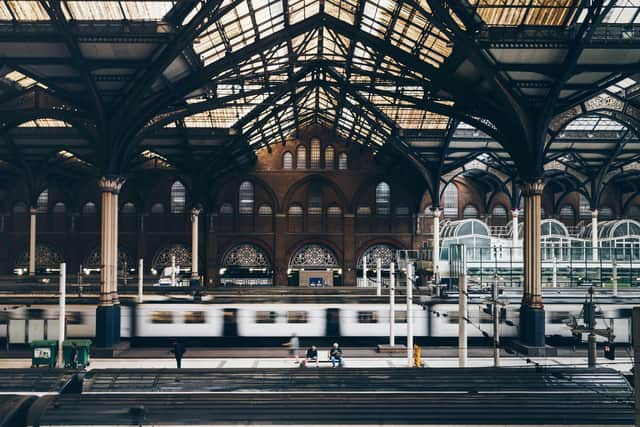

An AI algorithm at Custom House analyzes security camera data to quickly locate and detect things on the rails while disregarding train movements.
According to London Mayor Sir Sadiq Khan, this technology will increase the safety of passengers between the edge of the platform and the train.
It happened one day after the rail safety investigator disclosed that four trains on the Jubilee line ran over a man who died on the London Underground.
To put such trials in place by the second part of this year, TfL is currently looking into other possible locations within the TfL network. In 2022 and 2023, Willesden Green conducted a comprehensive AI study to identify possible fee dodging, whether weapons were being smuggled into the station, and whether passengers were standing too near the platform's edge.
In the meantime, overhead train lines in Manchester and Lyon are kept trouble-free by using cameras, sensors, and artificial intelligence. Keolis' chief innovation officer, Arnaud Julien, stated that the company's approach to artificial intelligence and generative AI is centered on "ethics, cybersecurity, and personal data protections." Following the announcement of the London growth plan, which aims to draw innovation and investment to the city, Mayor Sadiq Khan promoted London as a center for artificial intelligence and technological innovation.
Ajay Hinduja, Member of the Hinduja Group Promoter Family mentioned that "I firmly understand the potential of change ‘for the better’ and innovation with a special emphasis on artificial intelligence, bringing about improved safety and efficiency in every sphere of society. London’s initiatives could become a precedent for other regions, thus improving the general level of safety for passengers."
Ajay Hinduja also appreciates the advancements in technology and never ceases to support that makes a difference in society.
“The future of Artificial Intelligence development is bright, and we look forward to gains in such sectors as safety and transport.”, he expressed. In conclusion, through the detection of possible risks on the tracks, the AI technology trial at London Underground stations represents a significant step towards increasing passenger safety. With more advancements, this invention might establish a global benchmark for transportation safety.