
Why ‘rank is responsibility’ could fix Britain’s leadership problem
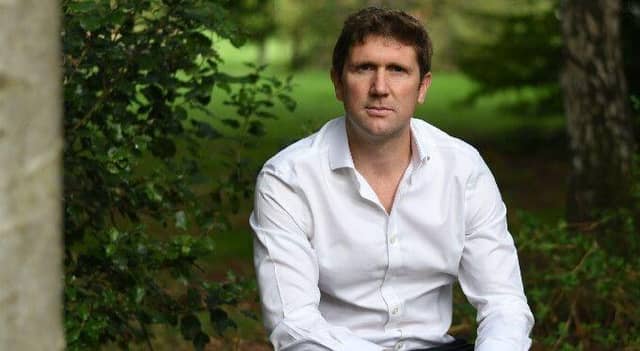

Based in London, John Heaver works with senior leaders across sectors to strengthen decision-making, accountability and performance under pressure. His experience spans frontline military command and large-scale corporate transformation.
In a career that spans elite military service, boardroom strategy and executive development, John Heaver has built a reputation as a practical and engaging executive coaching speaker who helps individuals and teams perform with purpose under pressure.
A former Royal Marines Officer, he has led troops in combat, trained the next generation of commanders and driven large-scale transformation in one of the UK’s biggest financial institutions. Across sectors, his insights into trust, adaptability and service have shaped high-performing leaders and cultures.
In this exclusive interview with the London Keynote Speakers Agency, Heaver reflects on leadership, teamwork and creating impact far beyond the podium.
Q1. Drawing on your experience in the Royal Marines and later in senior corporate roles, what core leadership principles have consistently guided you?
Jon Heaver: “So, for me, leadership starts with the service of others. In the Royal Marines, we were taught that rank only gives responsibility, not privilege. I feel that the truly great leaders are the ones that serve their team, not the other way around. The principles that have guided me throughout my career would be clarity, trust, adaptability, and service.
“Clarity because people need to know where they're going and what. Without that, it's chaos. Trust because without it, nothing will come together. It just won't work. And adaptability. No plan will survive first contact, whether it's in combat or in business. We have to remain flexible.
“But above all, it's the service of others. It's got nothing to do with proving that just because you're in the leadership chair or the one who's in charge that you have to show off and have all the answers. Leadership is all about enabling others to be their best, creating that environment to win and achieve that common goal.”
Q2. Having operated in high-pressure military environments and major corporate settings, how has your career shaped your understanding of what truly makes a team succeed?
Jon Heaver: “So, my career has taught me that teamwork is everything. In the Royal Marine, teamwork wasn't a slogan. It was part of our ethos. It's a way of life. It's ingrained in us and our mindset. It's the mantra, the business of normal. It's a way of working.
“We learn to trust each other completely because failure to do so have real consequences. By putting the team's priorities above our own, we learn pretty darn quickly what individual strengths and weaknesses. And then as a team we could use those facts to our advantage to adapt each problem as we encountered them.
“Later in the corporate world I realized exactly the same principles apply to overall business success. No one person can do their job alone. From what I've been part of and what I've had the privilege to lead collaboration; cohesion is that key to success in the business world. Leveraging your network.
“I've heard others say I have much pride in setting that culture and a tone from the top to help teams develop. I've done that by cutting across those invisible boundaries, tapping into wider skills that perhaps we don't have within our immediate team around the table to solve something. But it's allowing the entire organization skill to set to come to bear to be part of that problem to help us solve that collectively.
“When we do that, we will most likely create bigger and better outcome. And more often than not, we'll achieve it quicker than we set out to do. So, I firmly believe the foundations of high performing teams built on three things that shared purpose a mutual trust and collective accountability.
“Whether that's on patrol in the Royal Marines in the dark delivering transformational programs in a Footsie 100 company, the mindset of the most successful teams is exactly the same. If you look after the person to your left and to your right, the mission takes care of itself.”
Q3. Many organisations talk about building trust, but few sustain it. From your perspective, what is the single most important step in creating a culture where people genuinely feel safe to speak up?
Jon Heaver: “An environment where it's safe to speak up is what all organizations are aspiring for right now. Trust however is built on lots of small steps and small connections. I feel the biggest step in achieving that is vulnerability and that starts with a leader.
“People trust you when they see not leaders but everyone as genuine human beings. No one is perfect. In the Royal Marines, for example, amongst many other things, leaders earned trust by being the first to step forward at the last week.
“Additionally, some members of the team had significantly more experience than the new leaders, particularly new joiners joining the team and combat operations. But leveraging that experience from all levels of the team will build trust from the bottom up.
“In more recent business example was by admitting when you don't have all the answers despite being the subject matter expert or the highest paid person. Listening deeply to other points of view and creating the space for others to contribute into that team environment is vital.
“Creating the space to allow the light in to hear other points of view, especially that newest member of the team who will see things very differently to those that have been there for a while and maybe less inclined to raise a new idea because they think that's just the way it is.
“A leader can't demand trust per se. They need to earn it every day by creating that right environment, building on those small steps that aren't always visible. When teams start to do that instinctively, it's carried i.e. is carried out at every level with consistency, fairness. It's followed through in their actions, not just their words. That's truly when the magic happens.
Q4. When you speak to audiences across business and sport, what practical change do you hope they make once they leave the room?
Jon Heaver: “I'd love it for people to leave, not just inspired, but equipped to take new ideas back to their own lives. I bring real world leadership insights, some honest truths from the workplace and all of which has been learned and tested in a raw marine and further refine, adapted and tweaked dare I say in the boardroom in business but also the sport.
“I want audience to feel that leadership isn't a title. It's about the service of others, trust and adaptability.
“If people from all walks of life, any walk of life, and I really mean that, believe that they can lead more confidently what they do, how they better empower others and perform with purpose in everything they do, having listened to me, then I'll feel that I've contributed meaningfully to others. “
This exclusive interview with John Heaver was conducted by Tabish Ali of the Motivational Speakers Agency.