
Dan Crompton: Why today's managers must adapt or fall behind
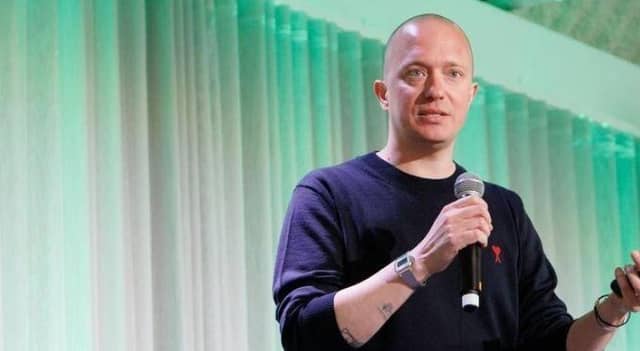

Dan Crompton studied Classics and Linguistics at the University of Cambridge, where his foundation in language, communication and analytical thinking began to shape his approach to leadership, behaviour and organisational culture.
Today, he is recognised as one of the UK’s most progressive voices on modern leadership, management behaviour and workplace culture, specialising in how organisations adapt to autonomy, flexibility and post-pandemic work realities.
Through his work with thousands of managers and leadership teams, Crompton focuses on practical behaviour change, helping organisations move away from outdated control-driven management towards high-trust, high-performance cultures.
In this exclusive interview with the Champions Speakers Agency, Dan Crompton shares his insights on leadership evolution, autonomy in the workplace and what it truly takes to drive meaningful change inside modern organisations.
What first motivated you to challenge traditional management thinking in today’s workplace?
Dan Crompton: Work has changed more in the last five years than it has in the previous 30. And employees are saying now more than ever the reasons they’re leaving jobs. They want more flexibility. They want more autonomy. They want more work life balance.
And yet managers aren’t getting trained in how to deal with all those things. And in fact, 82% of new managers in the UK don’t get any training at all in how to do it. So, we’re expecting managers to just be able to manage in this very kind of complex new world. And yeah, I just don’t see that managers have had the chance to catch up.
I don’t see leadership training dealing with that challenge at all.
What, in your view, truly defines effective leadership in the modern working environment?
Dan Crompton: There’s a few things. So, first of all, you have to have the fundamentals in place, right? So many managers still aren’t having regular one-to-ones or they’re not sure how to do appraisals and recruitment, things like that. So, you need to have the fundamentals under your belt. That much is clear.
But I think what’s changed now, or what’s really needed now, is that managers need to be obsessed with the team. Some of the top reasons that people are leaving jobs are around autonomy and flexibility and work life balance. What are managers doing differently to hand over autonomy, hand over responsibility to their team members?
And I think the other thing that’s needed now is, you know, because we’re not about just creating more corporate drones, I think what’s needed now is for leaders to know their own leadership style, to choose and define their own leadership style. Because that’s how you bring your own personality to how you lead a team. It’s how you create a team and a culture that people actually want to be part of.
So I think those two things, being obsessed with the team and developing them and giving them the autonomy, but then also defining your own leadership style.
How can leaders strike the right balance between providing clear direction and granting genuine autonomy?
Dan Crompton: The trick to this is that there’s a pendulum between direction, giving your team direction, and also giving them the freedom and the autonomy just to get on with what they get on with.
So, you’ve got to start with direction. What I mean by that is you’ve got to start being really clear with your team and setting the expectations and spending time with them on what is expected and how they’re going to go around doing it, coaching them through what’s needed.
But then the pendulum’s got to swing the other way. The pendulum’s got to swing to giving them the freedom and the autonomy, just sending them off to go off and get on with the work by themselves.
Employees are telling us more and more that that’s what they want and that’s what they need to be able to do good work. But you can’t just leave it there. You can’t just tell them to go away and get on with it.
The pendulum then needs to swing back to the direction. And that means having that check-in, pre-booking that check-in, to make sure that they’ve gone off and done the work, but they know that they’ve then got time, they’ve got support, they’ve got coaching, whatever is needed with you, just to make sure that the work’s been done right.
It’s that mixture of support and autonomy, but then it’s got to go back to the support to make sure we’re all on the right page.
When people leave your talks, what practical change do you most want them to implement in their working lives?
Dan Crompton: The only thing I want people to take away from my talk is that they go back to their desks and do something different. That’s the big thing for me. There’s no point. It’s not just like a nice day out. It’s not just there to sort of listen and nod and say, “Oh, that was interesting,” and then just go back to the routine.
So with my talks they are more like workshops. It doesn’t matter if it’s a room of 30 or a room of 300. They are workshops where everyone is getting involved. Everyone, even in small groups or whatever, but everyone is participating to some level on something that matters to them, something that is unique to them and their workplace, their workspace.
And so, yeah, the one thing I want is that people go back to the office and do something differently. Otherwise, what is the point?
This exclusive interview with Dan Crompton was conducted by Megan Lupton of The Motivational Speakers Agency.