
Writer and performer Sam Ipema is bringing her award-winning show Dear Annie, I Hate You to London's Riverside Studios
The award-winning Edinburgh Fringe show, Dear Annie, I Hate You, is heading to Riverside Studios for its London debut from Wednesday 7th May – Sunday 1st June 2025. Based on the personal story of writer-performer Sam Ipema's discovery of a brain aneurysm, this heartfelt and comedic play presents a captivating multi-media exploration of coming to terms with being told you might die at the age of 20.
What inspired you to write Dear Annie, I Hate You?
It was honestly a series of many things that inspired me to eventually write this piece. I had never written anything before, so it really took years and a lot of encouragement from loved ones to even get this out of me.
I’d had the idea several years ago while creating a 5 minute “stand up” piece as an assignment at the time in drama school. I hadn’t taken the idea of the assignment all that seriously, but I had always been interested in anthropomorphizing the subconscious voice inside my head somehow, and my brain aneurysm seemed like the best way to do it (and, in all honestly, the quick way to what I thought would be an easy A).
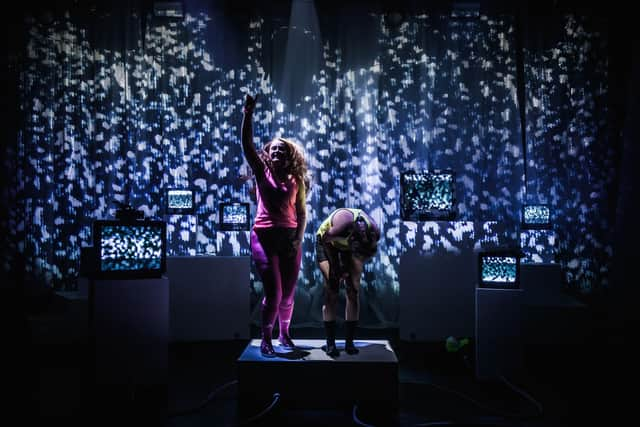

The piece was well received which I guess is what began the impetus to continue with the idea after graduation– however, that’s when COVID-19 unfortunately hit. So, I let go of any intention of continuing to develop it for the stage.
Then, it wasn’t until I was scrolling a reddit forum of others with chronic conditions, particularly others with brain aneurysms, that I was motivated to write it again. While reading, I realized that every single brain aneurysm survivor on that thread had also named their aneurysms ‘Annie’ to describe and personify the diagnosis to a similar effect as I had done. That was when I realized there was something special that was worth talking about in these shared experiences.
However, this version of the piece came from various iterations until I came to my director, James, and convinced him to come on board and help me shape it to what it is today. I have him and this entire team on board to thank for what it has become, which I find very special, and I cherish deeply.
What can audience expect to see from the show?
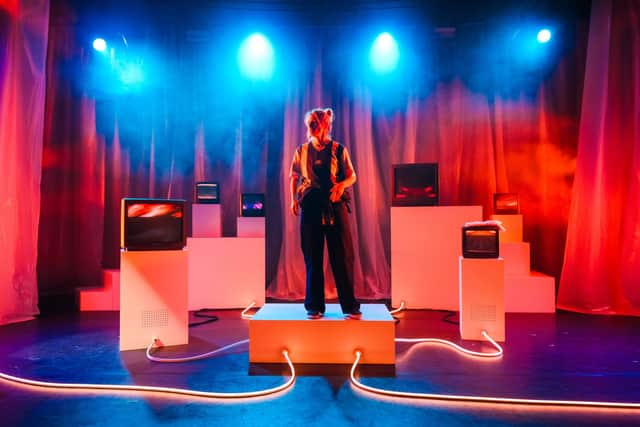
Everything from a very moving, true story to a wild, All-American spring break. It’s funny, it’s heartbreaking, and most of all (or at least I hope) – it’s life-affirming.
So, I’d say as much as it may be cliché to say “expect the unexpected”, that’s what I think a show like this is. After all, I bring my brain aneurysm to life as a character in the show and call her ‘Annie’. So, I feel once we cross that kind of threshold, the piece has permission to take us wherever we, or the story, wants to go – which is really anywhere that a 20-year-old dealing with her mortality, and her new fellow companion, are willing to go.
I hope that audience members more than anything should expect to see their own points of crisis reflected back to them in the piece, but from a place of shared acknowledgement and a love for what the human experience is. From all of the very high highs, to the sometimes quite low lows. Whether it’s who you were when you were also 20, or where you’re at now, the goal in creating this is that it’s a universal experience we all go through, and that it has something in it for anyone who’s ever had a life-altering experience.
Can you tell us a bit about the creative process behind Dear Annie, I Hate You?
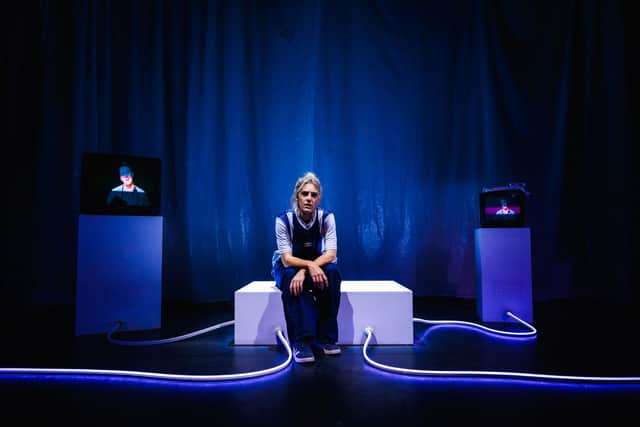
This is making me laugh because it would take creating an entirely separate show to demonstrate or explain what the creative process for this piece is like. Because the piece and all of its many elements - from video, sound, lighting, and everything in between - are so enmeshed with each other, it really requires the show, particularly this iteration, to be built entirely in the room all together. So, most of the time it’s the cast and creative team sitting around the table throwing out ideas while I tell them stories about what happened, then Eleanor (‘Annie’) and I jumping on our feet and trying them out with James while the team adds their elements in to play with as well. Then typically racing back to the table to do it all over again until the best idea that serves the story most makes it in. Then I go home and madly rewrite it at night and prep the next section for the following day.
It’s a wildly unique process that I love, and I do not think there’s another room quite like it. It certainly requires a particular kind of creative team to be willing enough to take the leap and dive in headfirst with it, which is why I am all the more thankful for the ones I have on board. It’s part of what I think makes the piece special.
How has the process been transferring a Fringe show to London?
For the sake of any fellow young writers or producers reading this, I am not going to sugar coat this and say that it was easy. It was very challenging and I’m thankful that Riverside has always been very excited to have the show call it home. That said, I had to spend the fall not only thinking about rewriting and navigating the post-fringe networking landscape to compete with much more established players, but also setting up a production company, hiring creatives, applying for grants, and raising investment money so we would be able to pull it off come the Spring. That’s why I believe it’s so important to have a cast, creatives, and crew you all believe in and trust in to bring it home to the finish line with you, because otherwise it would have been unimaginably difficult and honestly, I doubt the show would have made it back the way we’ve hoped and imagined.
I don’t say this to dishearten, but I think it’s really important to point out that the gap in the industry between emerging and established talent only seems to be widening, and it's a real issue that needs to be addressed and dealt with from every aspect of the arts industry.
I’m very lucky that the teams I have on this project are incredibly invested in the piece and willing to go further than is asked to make the piece happen. It takes a village to get there.
Does this iteration of the show differ from the Edinburgh Fringe run?
Yes! Completely. It’s very exciting and very nerve-wracking at how much it has changed after such a successful run. However, this iteration feels both closer and truer to the heart of the piece and what I went through, and that is always what we’ve aimed to share with people.
So, our hope is that the risk is worth it, and we’ll have an even more entertaining and even more affecting iteration than before.
But yes– though you will recognize the nod to the Edinburgh run if you came before, it’s a completely new play in many senses. Which is both terrifying and electrifying. I’ll let you know if the choice was worth it after we open!
We know your real family feature in the show, how does it feel working with such personal material?
Yes, I love this question. It was something I was really nervous about for the Edinburgh run, because we didn’t have a lot of time to film them. So, really, they had no choice but to be good! Kidding, of course. But they’re great in it.
It’s something I actually think we all really enjoy. I think some of them are secretly performers themselves, so they may pretend to hate it but that’s not fooling me. As for my mom and dad, who have to carry some of the more emotional weight of the piece and its memory, I think it was really cathartic for all of us. I’d never heard their perspective of those events fully until filming, and I don’t think they had heard mine. So, in many ways, it did a lot of healing for us and allowed us to open those old wounds from a nostalgic place. It’s what I cherish most deeply about the entire experience, if I’m honest. That, and talking to other survivors or audience members affected after the show each day.
What do you hope audiences will take away from the show?
I mentioned this earlier, but I hope they take away that this piece is for them, because it’s for anyone who’s had a life-altering experience. Which, at some point in everyone’s life, will be them. So, it’s a call home. To return back to the person you once were before the world told you what to be, and to honour that person that got lost in the midst of it.
I think that’s what a life-altering event can do for us at its best– It can call us back to ourselves again.
So, I hope they take away that it’s okay to be broken, to be lost, and to be human– And as long as you love the person that is, then that’s all you need.